
Source: cyprus-mail.com
First female LNG captain in Cyprus calls for focus on mental wellbeing
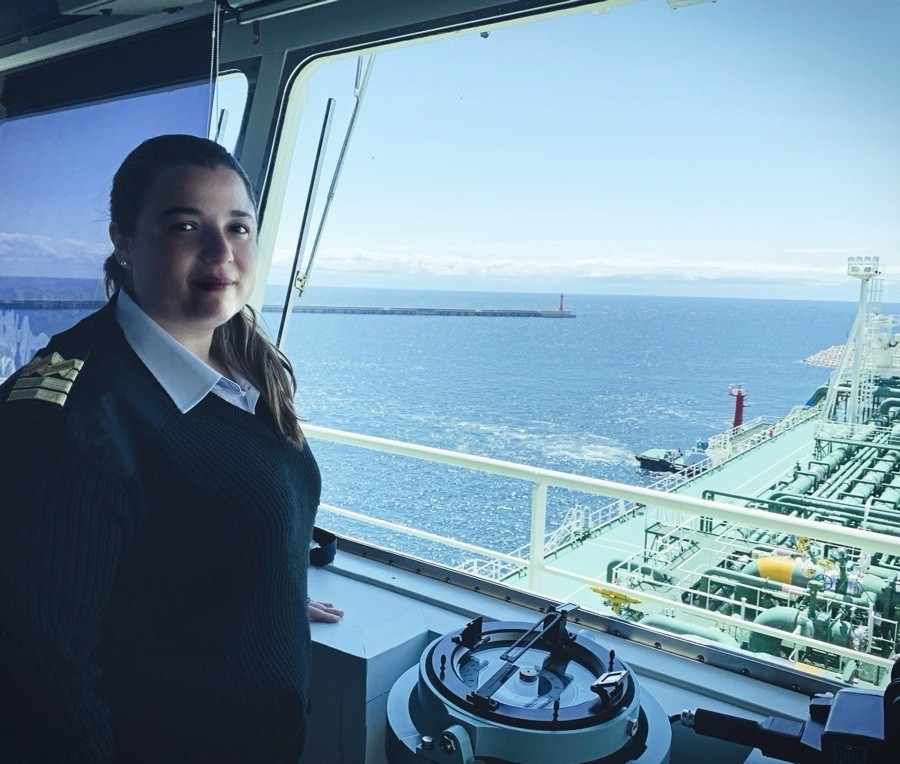
Captain Iro Gidakou’s story begins, as many maritime stories do, with the sea. What sets it apart is everything that came after.
From Limassol to the bridge of an LNG vessel, she built a career in one of shipping’s most demanding fields, refusing to be narrowed by the limit’s others tried to place around her. In doing so, she became the first woman to command an LNG vessel in Greece and Cyprus.
Now Fleet Operations Manager at Maran Gas Maritime Inc., a role she has held since 2021, Gidakou brings more than 19 years of experience in shipping, much of it focused on LNG transportation.
Speaking to Cyprus Mail, she reflected not only on the personal journey that took her from Cyprus’ shoreline to one of shipping’s most demanding specialisms, but also on the wider human pressures the industry still struggles to confront, from mental wellbeing and career progression to mentoring, inclusion and the strain placed on crews in times of geopolitical crisis.
A dream shaped in Limassol
Asked when the dream first began, Gidakou said it did not appear all at once. Instead, it took shape gradually as she grew up in Limassol, where the sea was always present in her surroundings and in everyday life.
Over time, the decision to turn that presence into a profession formed as she matured and realised that responsibility did not frighten her but inspired her. “The dream did not appear suddenly, it was built gradually,” she said, adding that becoming a master mariner emerged as a life goal based on work, endurance and constant development, even though she knew from the beginning that it would be a long and demanding road.
Reflecting on what first drew her there, she said the roots of that ambition were close to home. Born and raised in the coastal city of Limassol, she described the sea as part of her life from an early age. Her family was directly connected to it.
Her father was a former seafarer and her grandfather a professional fisherman. She recalled watching her grandfather return from his fishing boat while she was still a child, admiring not only the work he did, but also the kindness and dignity with which he faced difficult conditions, both at sea and in life. There were also strong women in her environment.
Her mother and grandmother were her first role models of strength and endurance, shaping the way she thought from very early on.
As the conversation turned to the moment when the idea hardened into a decision, Gidakou said the decisive point came when she began to seriously consider the sea as a professional path and made that known both at school and at home. The reaction, she said, was immediate and discouraging.
She heard many “noes” and was told that it was a male-dominated profession she should not even be looking at, especially since, as some put it to her, she had the potential for something “better”. Far from deterring her, that response clarified things.
“I was always a child with ambitions and dreams and that was the moment I realised that, when they told me the sea was not for me, that was exactly where I belonged and exactly what I wanted to do,” she said. It was not, she stressed about proving anything to others, but about proving to herself that no dream is unreachable when you truly believe in it and pursue it.
Breaking barriers at sea
Since joining the Angelicoussis Group in 2007, Gidakou has built a career marked by notable firsts. A graduate of the Greek Merchant Marine Academy in Marine Transportation, she also holds an MSc in Shipping and Finance from the Cyprus University of Technology, combining seagoing experience with academic training in the sector.
Looking back on the breakthrough that made her a point of reference in maritime circles, she recalls experiencing it as a personal vindication. Gidakou became the first female captain at Maran Gas to command an LNG vessel in Greece and Cyprus, while also being recognised as the first female captain in Cyprus.
Over time, though, she came to see that achievement as something larger than herself. “Being ‘the first’ has limited value if it does not create space for others to follow,” she said.
Even now, if asked what she considers her greatest professional achievement, her answer remains her command. What matters most to her in that achievement is the fact that it proves any role is possible.
It is not determined by gender, she said, but by preparation, persistence, consistency, mental strength and character.
Pressed on whether breaking that barrier brought with it added pressure to prove herself at every step, she said it did. There was pressure, she acknowledged.
What she came to understand along the way was that her only real obligation was to herself and to the level of professionalism she had set as her target.
“That pressure did not work as a deterrent,” she said. On the contrary, it became a source of motivation, pushing her to remain fully prepared, focused and consistent at every step, while teaching her to trust her work, her decisions and the experience she was gaining in practice.
From ship to shore
Turning to her move ashore in 2021, Gidakou said the shift from seafaring to a shore-based fleet operations role was not originally a fully planned decision.
She knew, however, that because of her own need for constant professional development, such a moment would eventually come.
The uncertainty of the Covid period, combined with the professional proposal she received and saw as an opportunity worth taking, accelerated the decision and led her to make the move perhaps earlier than she had initially imagined.
She had always been interested in serving in a role where she could add substantial value and make use of her experience in a more holistic way.
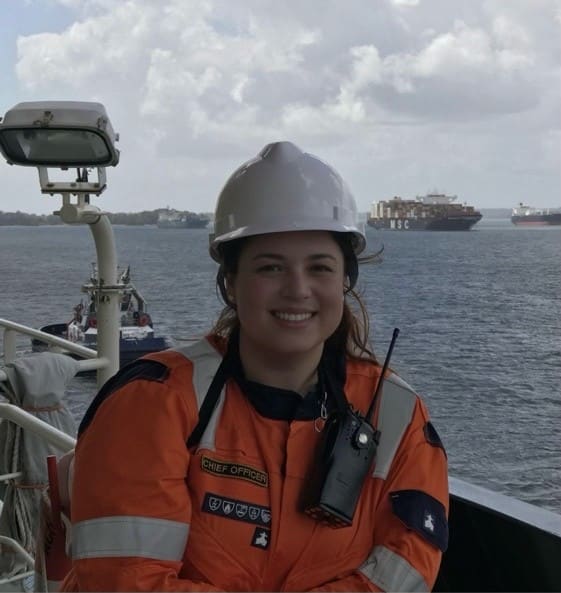
Moving from sea to shore, she said, allowed her to contribute more broadly, with a greater role in decision-making and fleet operations.
On a personal level, she made it clear that it was not an easy transition. Her relationship with the sea remains deep. “I chose to approach it as a natural evolution of my professional path, with clear direction and long-term perspective,” she said, making clear that the move may have been rational and necessary, but it was not emotionally simple.
On the divide between ship and shore, Gidakou said that having worked on both sides has given her a far clearer understanding of how different reality can be perceived between vessel and office.
When a person is at sea, the office can seem distant, often detached from the daily conditions and immediate needs of life on board.
There are issues which, from shore, may appear minor or purely procedural, but for those on-board can have a direct and substantial impact on safety, functionality or psychology.
The reverse is also true, she noted: from the ship it is not always possible to see the broader operational pressures, regulatory obligations and constraints within which the office operates.
“The real gap, therefore, is not a matter of intention, but of perspective,” she said, adding that it can only be bridged through open communication, mutual understanding and meaningful knowledge of both sides.
The human cost of life on board
When asked what shore management still does not fully understand about what crews go through on board, she pointed first to the sheer continuity of the strain.
On a ship, there is no real “off”. Work and life merge, without meaningful decompression, and that comes at a cost, particularly on a psychological level.
Even small daily demands, she noted, become heavier when there is no separation between work and personal life. “Work and life become one, without real decompression,” she said, arguing that the constant pressure, isolation from family and the lack of any real break from the work environment are directly linked to higher rates of anxiety, depression and burnout among seafarers.
For that reason, she said, the discussion around seafarers’ mental wellbeing cannot remain theoretical. It has to begin with the reality of life on board.
Why shipping must invest in people
On the question of where shipping still underinvests, Gidakou singled out two closely connected areas: mental wellbeing and career progression.
Although substantial steps have been taken in recent years, she believes the industry still underinvests in both. Mental wellbeing is often recognised in theory, she said, but continues to be treated in a fragmented way rather than as part of daily operations.
“Mental wellbeing is often acknowledged in theory, but it continues to be approached in fragments,” she said, stressing that life on board is marked by constant pressure and limited decompression, which requires steady and lasting support, not only crisis intervention.
Real investment in that area, she argued, means open communication, trust and an environment in which people can speak without fear or stigma.
Career progression, she added, remains equally underestimated. Once a person feels that their path has reached its upper limit, with no clear continuation or next step, there is a gradual decline in the willingness to push further.
“Real investment in seafarers is not only about helping them endure, but also about giving them the opportunity to evolve,” she said. And that, she noted, is not only true of shipping, but of any professional environment in which people want to build a meaningful and sustainable career.
Leadership, mentoring and inclusion
Speaking about adaptability, Gidakou said that for a seafarer in 2026 the term must be understood in practical rather than abstract terms.
In her view, it means the ability for continuous evolution in an industry that is changing quickly, through new technologies, digitalisation and stricter regulation. These shifts require continuous learning and understanding, not simply compliance.
But adaptability is not only about following change. It is also about how a seafarer understands their own professional path within those changes. In a sector where many eventually reach a point of saturation, she said, adaptability becomes the means through which a person can identify new prospects, redefine their role and continue to develop.
“In 2026, adaptability is a combination of technological competence, open-mindedness and the readiness to seek the next step,” she said, whether that step lies on board or beyond it.
Reflecting on the role of mentoring in her own journey, Gidakou described it as decisive. No one truly advances alone, she said, and in her own career mentoring has played, and continues to play, a significant role.
She has always had, and still has, people from whom she learns, seeks a different perspective, asks for feedback and receives guidance, not necessarily the same people at every stage, but different mentors depending on the period and on the needs of her life and career.
That process helps her continue to evolve, see things more clearly and make more conscious decisions. “For me, mentoring is a form of investment,” she added, not only in the development of individuals, but also in the preservation of knowledge, culture and leadership within an organisation.
Although the industry now recognises its importance more than it once did, she argued, it still does not approach it with the consistency and structure it deserves.
Asked about visible role models, she said they are directly connected to mentoring, even if they do not replace systematic guidance.
Rather, she sees them as complementary to it. They create visibility, cultivate trust and, above all, strengthen confidence that progress is possible.
When accompanied by genuine support and structured opportunities, their influence can become meaningful and lasting. “Role models have real value only when they are framed by concrete opportunities for development,” she said.
On women in shipping more broadly, Gidakou said the industry has made huge progress, though not at the same pace everywhere.
In many cases, she argued, the sector still speaks more about inclusion than it implements in practice. The conversation, though, has evolved in an important way. The question is no longer whether women “fit” in shipping, but how sustainable environments can be created in which they can remain, perform and further developed.
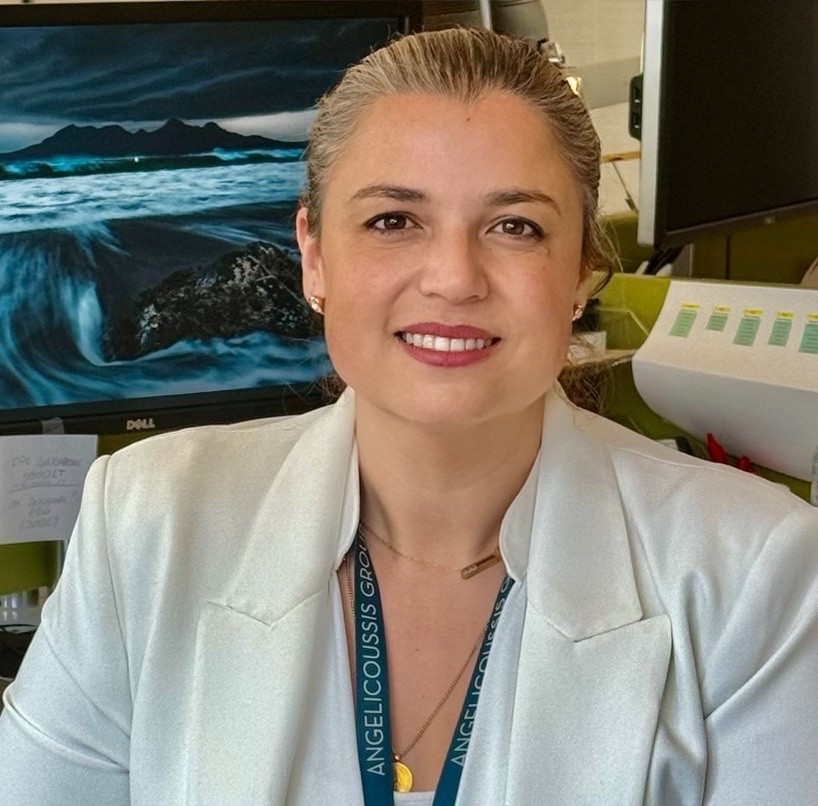
“Real progress is not measured only by examples or numbers,” she said, but by the degree to which inclusion is built into daily operations, career opportunities and organisational culture.
When discussing the advice, she gives to younger women approaching her, Gidakou said her first message is simple: they should be ready, not necessarily hard.
They should believe in themselves and in their abilities, because progress does not come through adapting one’s personality, but through competence and knowledge. Self-confidence, she added, is built through preparation and continuous learning, which in her view is where anyone who wants to advance should place their focus, regardless of gender.
When someone truly knows their subject, there is no need to prove who they are to anyone; their work does that for them. That is why, she added, she often repeats a phrase she deeply believes in: “Don’t give up. Resilience and consistency to achieve your dreams. Because if you can dream it, you can do it.”
LNG and the pressure of crisis
When the discussion moved to LNG as a specialist field, Gidakou described it as one demanding area in shipping. A career in LNG transport, she said, combines a high technical level, a strict regulatory framework and zero margin for error.
Seafarers are required to handle an extremely sensitive cargo at cryogenic transport temperatures, through procedures demanding attention, continuous alertness and daily monitoring.
Crews on LNG vessels must undergo continuous training and keep their knowledge constantly updated. Onboard systems, regulations and operational requirements evolve continuously, meaning that crew members must do more than simply follow procedures.
“Crew members must not merely carry out procedures but understand in depth what they are doing and why,” she said, stressing that the burden of responsibility is constant.
Turning to the Middle East crisis and its impact on LNG shipping, she said the turmoil has reshaped global seaborne trade, including the LNG market, leading to changes in shipping routes and the diversification of trading patterns as companies seek to mitigate the increased geopolitical risk.
Alternative routes, she noted, extend voyage duration, increase operational complexity and directly affect freight rates and the delivered price of natural gas.
War risk and additional insurance premiums remain fluid, adding both cost and uncertainty. “In this environment, heightened alertness places additional pressure on crews,” she said,emphasising the importance of clear communication and strong leadership.
What policymakers still need to fix
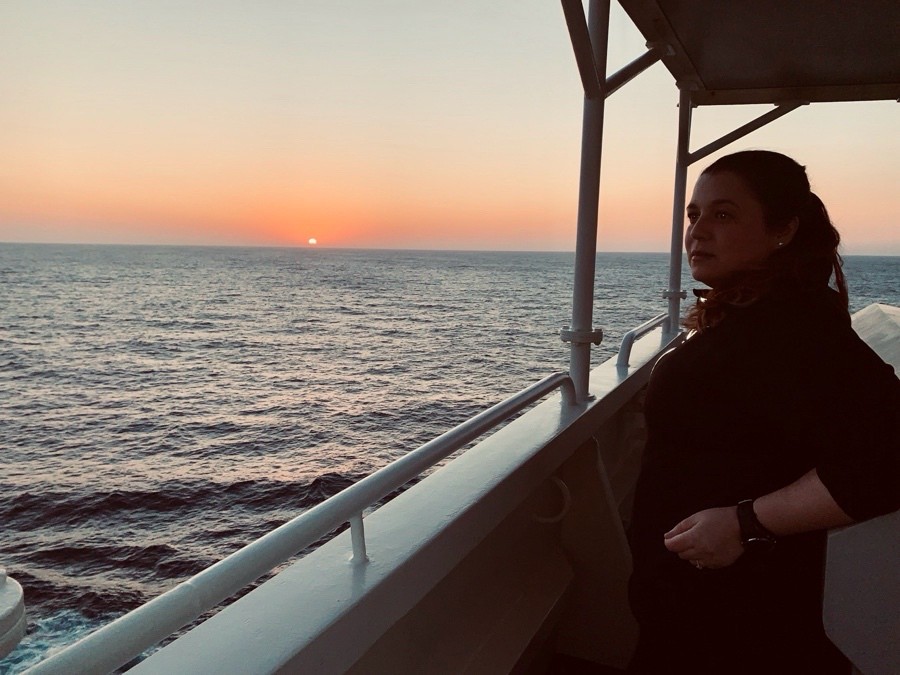
Asked what policymakers should fix first for seafarers, Gidakou brought the focus back to the people behind the industry. Maritime policy, she said, must first and foremost protect the people of shipping and seafarers, not just the vessels and cargoes.
The priority, in her view, is the creation of a fairer and more balanced institutional framework that genuinely protects seafarers. That means a framework in which the profession’s high level of responsibility is matched by equivalent legal and institutional protection, in which life stages such as motherhood do not lead to professional exclusion, and in which mental wellbeing and career progression are recognised as basic conditions for the long-term sustainability of the sector.
“When seafarers feel safe, respected and supportive, then the shipping industry functions with greater responsibly and more sustainably,” she said.
Looking back at her younger self, Gidakou said the path through shipping, like any demanding profession, requires resilience, growth and faith in yourself.
Challenges are inevitable, she said, but progress comes when a person invests in knowledge, takes responsibility and remains steady in their values.
Above all, she added, no one should ever allow others to make them smaller to fit expectations that do not belong to them. “Real strength lies in evolving without losing who you are,” Gidakou concluded.
That, perhaps, is the clearest thread running through her story, not simply a career at sea, but a refusal to be contained by other people’s limits.