
Source: in-cyprus.philenews.com
Cyprus will be able to track wildfires in real time using satellite imagery and artificial intelligence, receiving updated projections of a fire’s spread every 20 minutes at a resolution of five by five kilometres, a leading researcher said as an international space technology conference opened in Paphos.
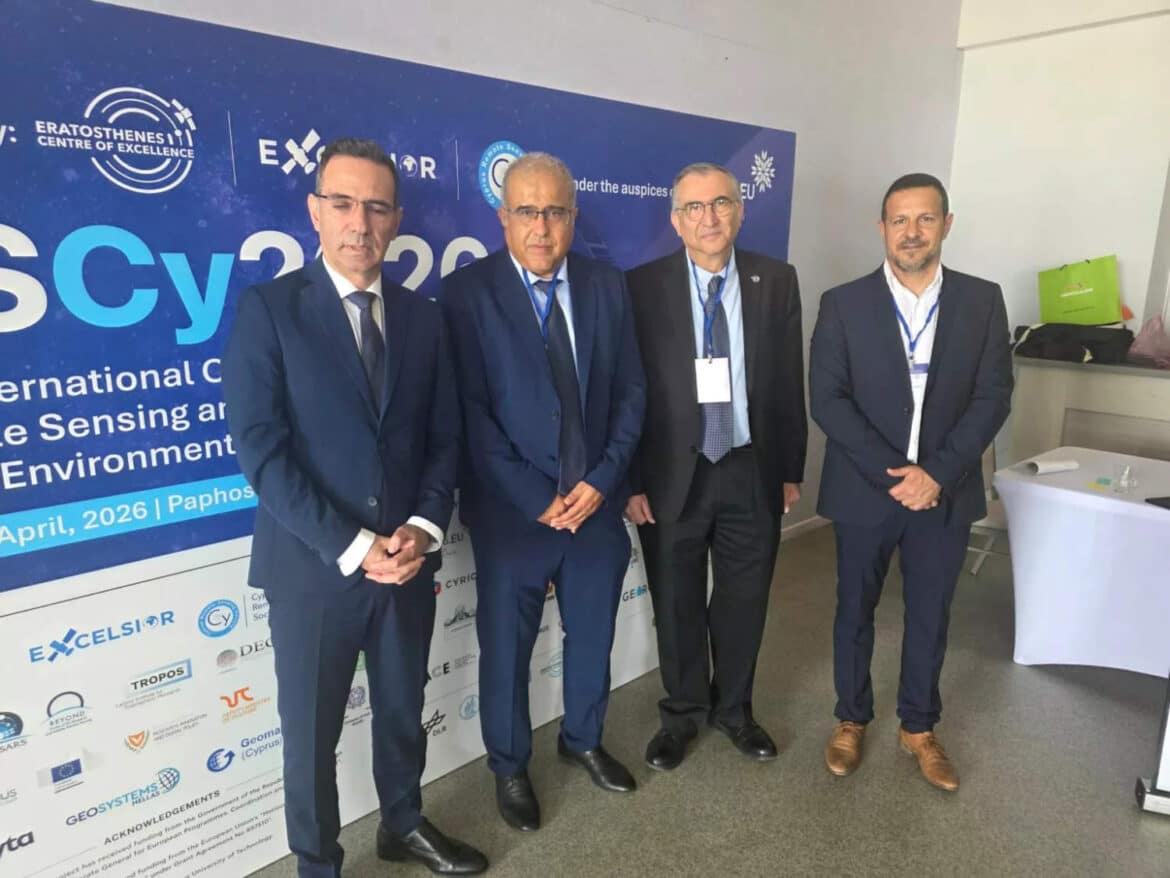
Diofantos Hadjimitsis of the Eratosthenes Centre of Excellence at Cyprus University of Technology made the remarks at the opening of RSCy 2026, the International Conference on Remote Sensing and Geo-information of the Environment, which runs in Paphos from April 27 to 29.
The conference is being held for the 12th time and takes place under the auspices of the Cyprus Presidency of the Council of the European Union.
“Imagine an area like Akamas, Solea or Troodos catching fire and being detected, with a projection every 20 minutes showing where the fire is heading, at a spatial resolution of five by five kilometres, that is 25 square kilometres,” Hadjimitsis said.
The technology will also allow Cyprus to access satellite images of any area and, using AI techniques, retrieve archive imagery of the same location over time, he said. A representative of a consortium created by Google is among the 14 invited speakers at the conference.
Hadjimitsis said 53 satellites are to be launched by 2030, strengthening the data available to countries participating in such programmes.
He also highlighted what he described as a space diplomacy dimension to this year’s conference, with ambassadors and embassy representatives from Germany, Italy, Poland, Sweden, Hungary, Greece, Egypt and India attending the opening session.
The conference has drawn more than 250 delegates from over 30 countries, as well as representatives of leading international organisations and policymakers, Hadjimitsis said, noting that the scale of attendance is unprecedented for the event.
For the first time, he added, the conference will present how European countries can connect with each other and with countries outside the European Commission in the field of space.
A representative of the European Space Agency (ESA) is also participating. Hadjimitsis highlighted Cyprus’s status as an ESA associate member and announced that a ceremony will be held in Limassol in early May, organised by the Deputy Ministry of Research.
The conference programme covers 30 themes through to Wednesday, including water resource management, natural disaster response, wildfire management, landslides and floods, as well as dedicated workshops on coastal erosion and carbon-sequestering agriculture.
Deputy Minister of Research, Innovation and Digital Policy Nikodemos Damianou, representing the President of the Republic, described satellites and space technologies as critical infrastructure capable of addressing major challenges.
“Satellites, other satellite means and space technologies are now critical infrastructure that can provide solutions to key issues such as climate change, for example monitoring the food system environment and beyond,” he said.
He added that an ecosystem is being built with the help of organisations such as Eratosthenes, which he described as part of Cyprus’s technological infrastructure.
Acting Mayor of Paphos Angelos Onisiforou said the municipality welcomes events that bring scientists from around the world together to explore innovative ideas.
(information from CNA)