
Source: in-cyprus.philenews.com
Demetrios Zoppos on technology, innovation, and Cyprus’s place in the world that’s coming.
Four moments in Pafos
In the Cyprus Museum in Nicosia, in a quiet case among the displays from the Early Iron Age, there is a small bronze rod. It is a spit, an obelos, found in a tomb at Palaepaphos-Skales near modern Kouklia, in the Pafos district. The tomb dates to around 1000 BC. The rod is unremarkable in itself, the kind of object that a wealthy man of that period might have owned in some numbers. What makes it remarkable is the inscription scratched along its length, five syllabic signs spelling, in the genitive form, the name “Opheltas”. It is the earliest known inscription of the Greek language found anywhere on Cyprus, and one of the earliest attestations of Greek anywhere at all. The script is a transitional one, somewhere between the Cypro-Minoan of the Bronze Age and the Cypriot Syllabary that would emerge over the following centuries. The man stood, three thousand years ago, at the meeting point of two technological systems for recording language, in a place that was already a point of synthesis between cultures.
I begin with Opheltas because the obelos is the earliest local instance of something this column will return to many times: a moment when Cyprus, despite its size, despite its position, despite the absence of any of the structural advantages that produce great powers, engaged with the technological frontier of its time. And it did so, as Cyprus has almost always done, in synthesis. A Greek name on Cypriot bronze using a script born of two earlier traditions, in a tomb full of goods that came from across the eastern Mediterranean.
From sacred gardens to silk
A few kilometres from where the obelos was buried, in the village of Yeroskipou, lies a piece of land that has been continuously productive for almost as long. The village’s name preserves its ancient identity as the Sacred Gardens of Aphrodite, the orchards associated with the goddess whose principal sanctuary was at Palaepaphos. Under the Lusignans the same land became a royal estate. In the early twentieth century, under British administration, it passed into the ownership of a German widow, Madame Frey, and became known as the Yerokipia estate, the estate of the German woman. Her family ran what was, for a time, the largest agricultural estate in Cyprus. The Yerokipia estate was the place where modern European agricultural methods arrived on the island at scale: improved varieties, organised irrigation, mechanised cultivation, the technologies that were transforming agriculture across Europe applied to Cypriot soil under foreign ownership and Cypriot labour. The synthesis again.
A short distance further, in 1926, the British colonial government opened a silk factory. It chose Yeroskipou for a specific reason: the village produced the largest quantities of the finest-quality silk cocoons on the island, the result of generations of mulberry cultivation and accumulated village skill. The factory was established in partnership with Italian technical experts who brought the industrial knowledge of European silk manufacturing. A few years later it passed into Cypriot hands, bought by the Lanitis family. During the Second World War, when the world needed parachutes more than fine fabric, the looms and reels were turned to wartime production. After the war it returned to silk and continued until it was overtaken by Asian competition and synthetic fibres, like many such others in the Mediterranean. Many members of my own family worked in silk production around Yeroskipou, including my grandmother. British initiative, Italian expertise, Cypriot raw material, Cypriot skill, eventually Cypriot ownership.
The silk factory was an instance of the principle of comparative advantage, associated with the economist David Ricardo: the idea that a country, even a small one without scale or hinterland, can become a recognised producer of something specific, when local conditions, accumulated skill, and an opening to global markets align. Cyprus did not produce the most silk. It produced, for a while, the best. That was enough.
The frontier moves again
The pattern is the same across three thousand years. Opheltas at the threshold of literacy, in a culturally syncretic Pafos. The Sacred Gardens turning into agricultural modernity at the Yerokipia estate, under German ownership and European methods. Silk weaving at Yeroskipou, under British colonial initiative and Italian technical expertise. At each of these moments, on roughly the same patch of island, Cyprus participated as a producer in whatever the technological frontier of the moment happened to be, and it did so by combining local conditions with international expertise, capital, or knowledge. This is not a weakness in the story. It is the story. Small economies that try to produce in isolation tend not to. Small economies that combine what they have with what they can attract sometimes do.
The technological economy now reshaping the world is unusually favourable to small countries with concentrated talent. Software costs almost nothing to ship. Artificial intelligence is being built by teams of dozens, not thousands. Deep-tech research can travel from a small laboratory to a globally relevant product in a few years. The constraint of scale, which kept small economies in intermediary roles for two millennia, has weakened considerably. The producer’s economy is, for the first time in a long time, open to us.
The Cyprus Deep Tech Report, which our fund 33East will be publishing over the next few weeks, takes an honest account of how we are using that opening. Cyprus has succeeded as a destination for already-formed technology companies. I estimate around 600 scaleups and more than 25,000 thousand technology professionals now based on the island. The upstream side, where new firms are formed and research is translated into products, is where the story is only just beginning. Cyprus now has around 500 early-stage technology startups with at least some of the team based in Cyprus, and just under €100m of venture capital deployed into some of these teams in the past calendar year. We have also identified deep-tech research at our universities and centres of excellence, which is only just starting to emerge in the form of spinouts, egged on the recent changes in the legislative framework which align Cyprus with European best practice.
These are the first signs of what may come – we have attracted some impressive companies which were originally assembled abroad through a combination of policies which made them choose Cyprus as their home. We are only now starting to build such companies in our home turf.
A stone’s throw from where the obelos was buried, and a few minutes from where the silk factory once stood, a small cluster of founders is quietly building companies that operate right at the edge of today’s technology frontier. Anna at Fitwise is building computer-vision software for sports analytics. Sergey at Positronic is building benchmarking infrastructure for the next generation of robotics. Max at Mokka is building AI-native candidate sourcing for global hiring. I should disclose that 33East, the venture fund where I am a partner, is an investor in each of these companies. I mention them because their geography matters as much as their technology. Modern Pafos, within sight of Palepaphos and Yeroskipou, has become a location of choice for founders building technology propositions which can travel across borders the way silk once did, and the way an inscription on a copper rod travelled across cultures three thousand years before that. The three founders, like much of Cyprus’s modern technology activity, are international arrivals. This is not a departure from the historical pattern. It is the pattern.
The choice
The argument I will make in this column, across successive fortnights, is that Cyprus has no real alternative to becoming a specialty producer of technology. Becoming a generalist is not available to us, but transforming our economy into a specialist producer of technology – in the way Israel has become a specialist in cybersecurity, Finland in mobile and games, Estonia in digital government – is a real opportunity. The traditional advantages – our legal framework and infrastructure, our tax regime, the widespread use of English which has become technology’s lingua franca, are real but will erode with time. Consumption of other people’s technology cannot be the long-term basis of a Cypriot economy. The producer’s economy is the only one that lasts. Opheltas wrote his name on a piece of bronze and was buried with it three thousand years ago. The Sacred Gardens of Aphrodite are buried in the sands of time. The Yerokipia estate is gone. The sound of the silk looms of Yeroskipou are but a distant memory. Anna, Sergey, and Max have taken over as the next generation building right at the technological frontier.
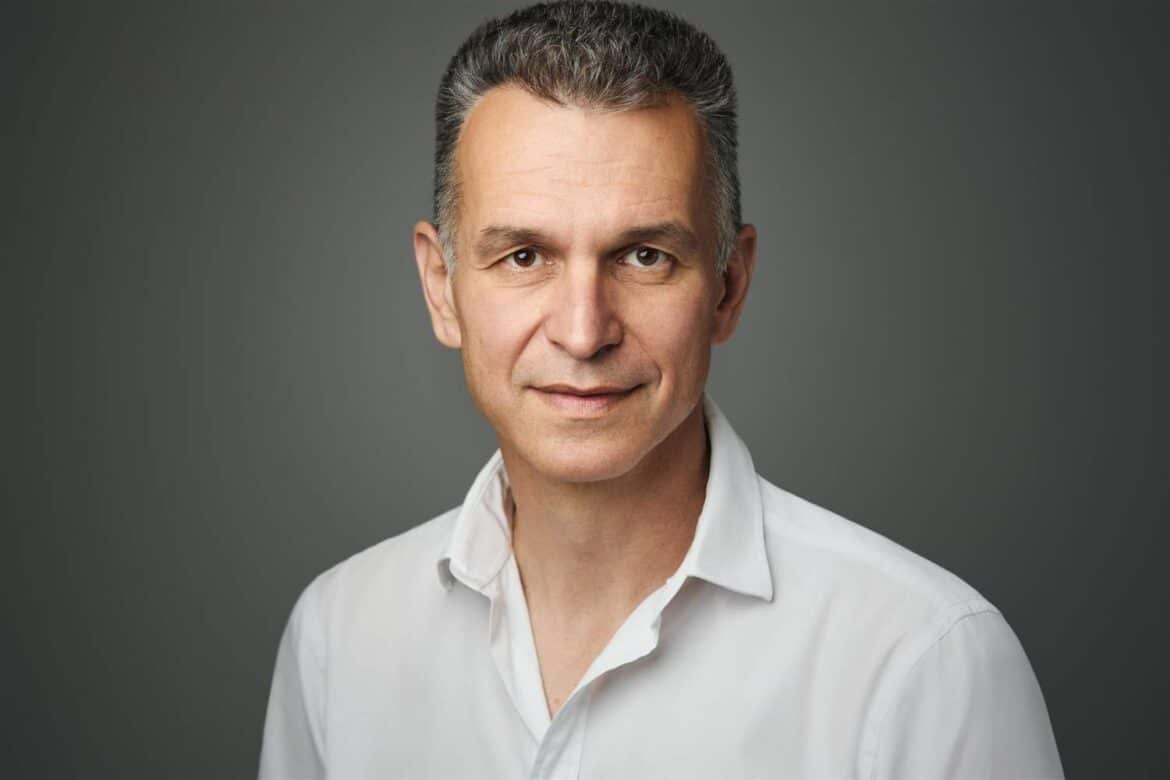
Demetrios Zoppos is a Partner at 33East. The views expressed are exclusively his own.