
Source: cyprus-mail.com
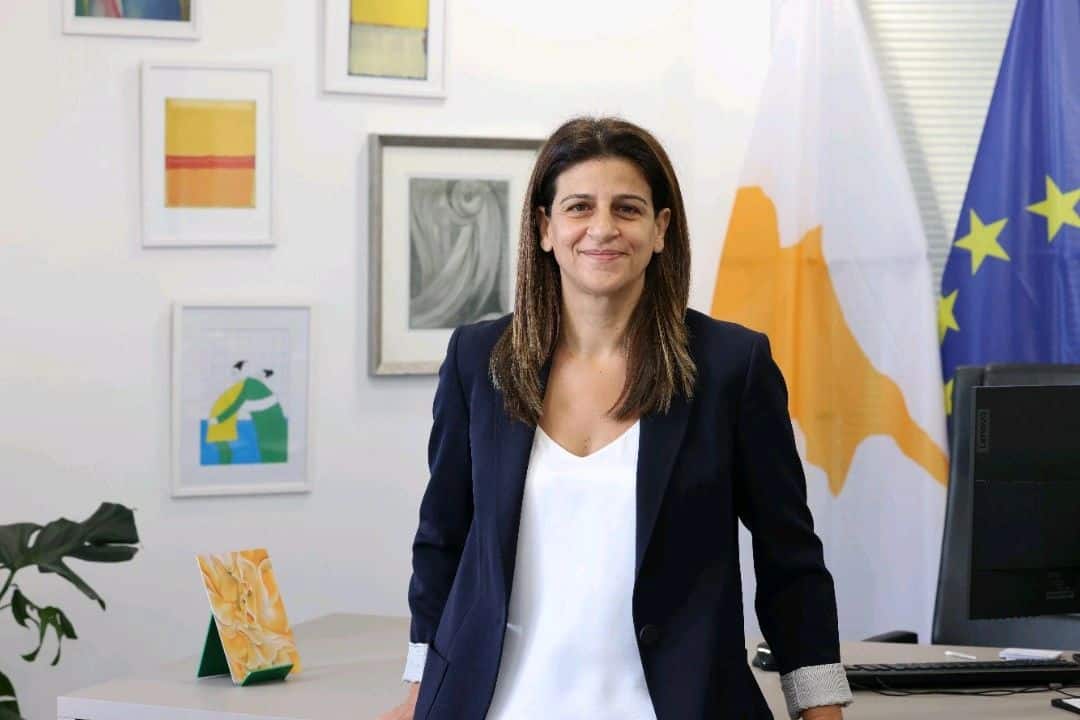
Artificial intelligence is already reproducing human biases and gender stereotypes, making the participation of women in the design and development of technology increasingly important, Gender Equality Commissioner Josie Christodoulou said the Cyprus Forum in Nicosia.
“We start by confirming that indeed AI is biased,” Christodoulou said during the fireside discussion “AI and Equal Participation: Who Shapes the Digital State?”, pointing to the data on which AI systems are trained and the people involved in creating them.
The discussion was chaired by Andreas Demetriou, founding member and Legal Advisor of AI³, and Rodoula Papalambrianou, Scientific Coordinator at Hope For Children CRC Policy Center.
Christodoulou explained that AI models do not develop their assumptions in isolation, but learn from existing material that can already contain deeply rooted social stereotypes.
“If you give a model a thousand books where in all 1,000 examples the doctor is a man and the nurse is a woman,” she said, it will assume the next doctor is a man, adding that “it perpetuates the bias”.
The issue, she argued, becomes more significant when women remain underrepresented in the technology and innovation sectors, because the people developing new systems inevitably influence what is built and which experiences are taken into account.
For Christodoulou, changing that begins much earlier than the workplace, with schools playing a central role in widening opportunities. “We have to work from school so that we give girls the opportunity to engage in science,” she said, stressing that boys and girls should be able to choose freely where they want their education and careers to take them.
However, getting women into technology is only part of the challenge. Christodoulou pointed to another pattern, with women entering technology-related professions but subsequently leaving them, particularly when they decide to have a family.
The deeper problem, she said, lies in culture and stereotypes that begin shaping expectations from a very young age, while the aim should be to allow both boys and girls to make their own choices without those expectations determining their future.
That makes representation important not simply because women should be present in the sector, but because they should also have a role in deciding how emerging technologies are developed and used. “Technology must be designed to serve women. The decision-making must include them,” Christodoulou said.
At the Cyprus Forum, however, the discussion extended beyond gender representation to another group increasingly exposed to the consequences of rapidly developing AI tools. Children.
Papalambrianou focused particularly on the use of artificial intelligence in forms of online violence, including deepfake technology used to create sexualised images and distribute them through social media.
The answer, she argued, cannot simply be a choice between banning or restricting technology and allowing children unrestricted access. Instead, children need the knowledge to understand what the technology is doing and to question what they see and receive.
Many young people, Papalambrianou said, place considerable trust in technology without necessarily challenging the information it produces. Some are also beginning to treat AI as a trusted adviser, describing it as “an available adult” that is constantly accessible and ready to listen.
That makes digital literacy and critical thinking increasingly important, with Papalambrianou calling for a unified approach to digital literacy across the education system and particular attention to children who may be more vulnerable.
The issue also requires human oversight rather than assuming that technology itself can resolve the risks it creates. “It will not be solved by an algorithm,” Papalambrianou said, adding that “a human must be involved”.
For Christodoulou, meanwhile, creating less discriminatory technology will require action beyond government and education. Boys and men must also be part of the discussion, alongside the private companies designing and developing AI systems.
The responsibility, she concluded, is collective, with AI reflecting the data, assumptions, inequalities and stereotypes already present in society rather than developing separately from them.