
Source: cyprus-mail
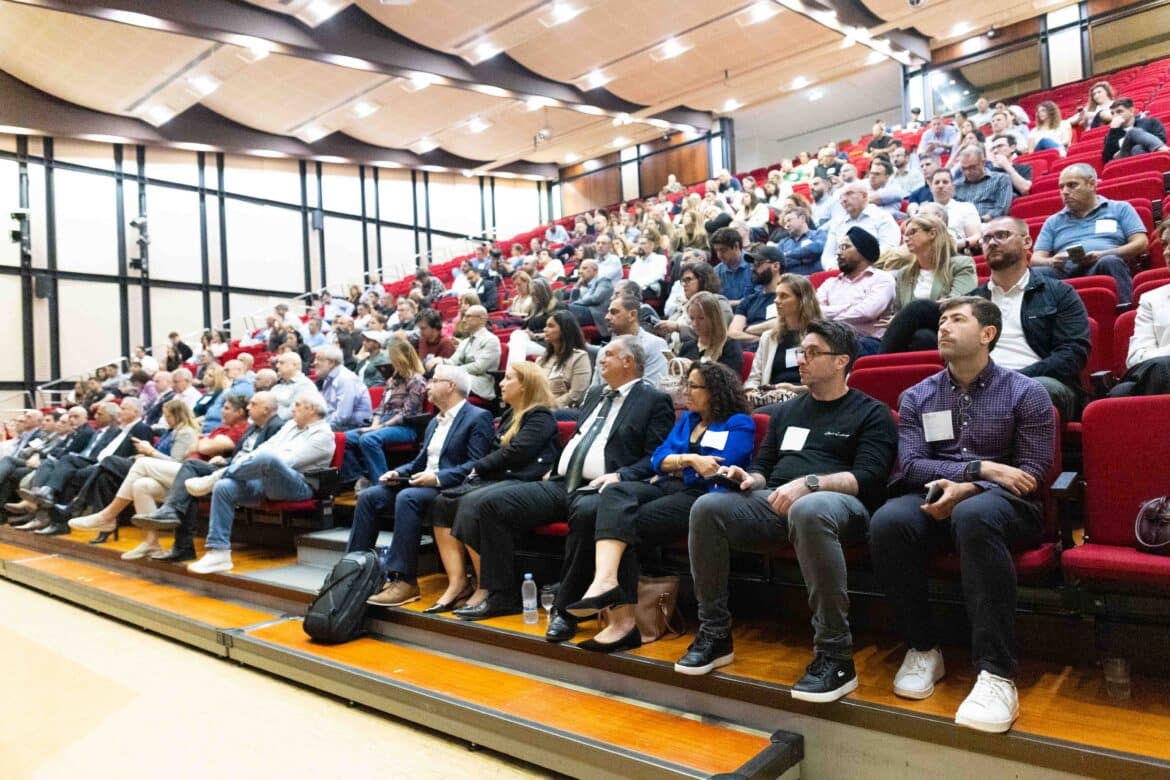
Cyprus businesses need to rethink how they operate, invest in their people and test ideas with customers as artificial intelligence changes the competitive landscape. That was a central message of AI in Practice: Changing the Future of Business, held on 19 October at the Cultural Center of European University Cyprus.
Organised by Panis.News, with co-organisers GrantXpert Consulting and Future Skills Hub at European University Cyprus, the event brought together business leaders, entrepreneurs, academics, professionals and students for presentations and practical demonstrations. It took place under the auspices of the Chief Scientist of Cyprus, Demetris Skourides, who contributed through a prerecorded interview.
The event was also attended by the Commissioner of Communications, Marios Pieri, and members of his office, as well as His Excellency Manish Manish, High Commissioner of India to the Republic of Cyprus. Their presence was warmly welcomed by the organisers.
Opening the evening, Dr Celia Hadjichristodoulou highlighted the questions organisations face when moving beyond experimentation: where to start, what to invest in, which skills teams need and how to achieve measurable results. She stressed that successful adoption requires leadership, curiosity and continuous learning alongside technology.
Panis Pieri, founder of Panis.News, said the event was designed to give attendees practical knowledge and opportunities to make new connections. The gathering formed part of the Panis Meetups series and Startup Greece Week.
In welcoming participants, the Rector of European University Cyprus Professor Dr Loizos Symeou highlighted AI’s role in teaching, research and university services. The address emphasised ethical responsibility, transparency and human judgment, alongside the need to develop creativity, critical thinking and the ability to adapt throughout a professional career.
Chief Scientist: adoption requires organisational change
In his recorded interview, Skourides outlined AI’s potential to improve productivity and help smaller businesses address constraints in processes and human resources. He stressed that introducing a chatbot or training an individual to use generative AI is only part of the work.
Organisations also need to examine their operations, identify and prioritise valuable use cases, and establish how the resulting benefits will be captured. His message placed skills development and organisational readiness at the centre of AI transformation.
Monica Odysseos: understand the problem and build adaptability
Monica Odysseos, Head of AI and Data Lab at Grant Thornton Cyprus, explained the differences between machine learning, deep learning and generative AI, connecting them to business applications including sales forecasting, customer segmentation, credit risk and anomaly detection.
She encouraged businesses to begin with a clear understanding of their problems before selecting a solution. Her central message was that adaptability, the ability to learn, unlearn and relearn, is essential as technology evolves.
George Malekkos: connect AI to everyday business decisions
George Malekkos, founder and CEO of Powersoft Computer Solutions, presented applications across retail operations, including inventory allocation, stock replenishment, demand-aware pricing and customer service.
He described how systems can combine sales information with signals such as weather, search trends and social media activity to recommend where stock should move. He also showed how marketing can be connected to inventory, helping businesses promote available products and slow-moving items. Human approval remained part of the stock-transfer process he presented.

Paris Thomas: faster building makes customer evidence more important
In his keynote, AI and innovation strategy adviser Paris Thomas challenged businesses to consider whether their current models would remain competitive in 2030. He argued that AI makes products easier to build while increasing the importance of choosing problems worth solving.
Paris urged companies to test assumptions with customers, develop new sources of value and look beyond efficiency gains towards business transformation.
A live demonstration illustrated the potential of AI agents: after photographing an attendee’s watch, Thomas tasked his AI assistant with preparing a listing. Before the end of his presentation, he showed the watch advertised on Bazaraki.
He also raised a leadership question: how should organisations recognise and redeploy employees who take the initiative to automate repetitive work?
The evening concluded with networking, giving participants an opportunity to discuss the presentations and explore potential collaborations.
The organisers thanked the speakers, attendees, gold partner AIA.Labs, silver partners Growth Hacking Cyprus, RSEVEN, Mel’s Digital, Makkas Winery and all supporters, community partners and media for their contribution.