
Source: cyprus-mail.com
President calls for faster licensing to attract quality investment
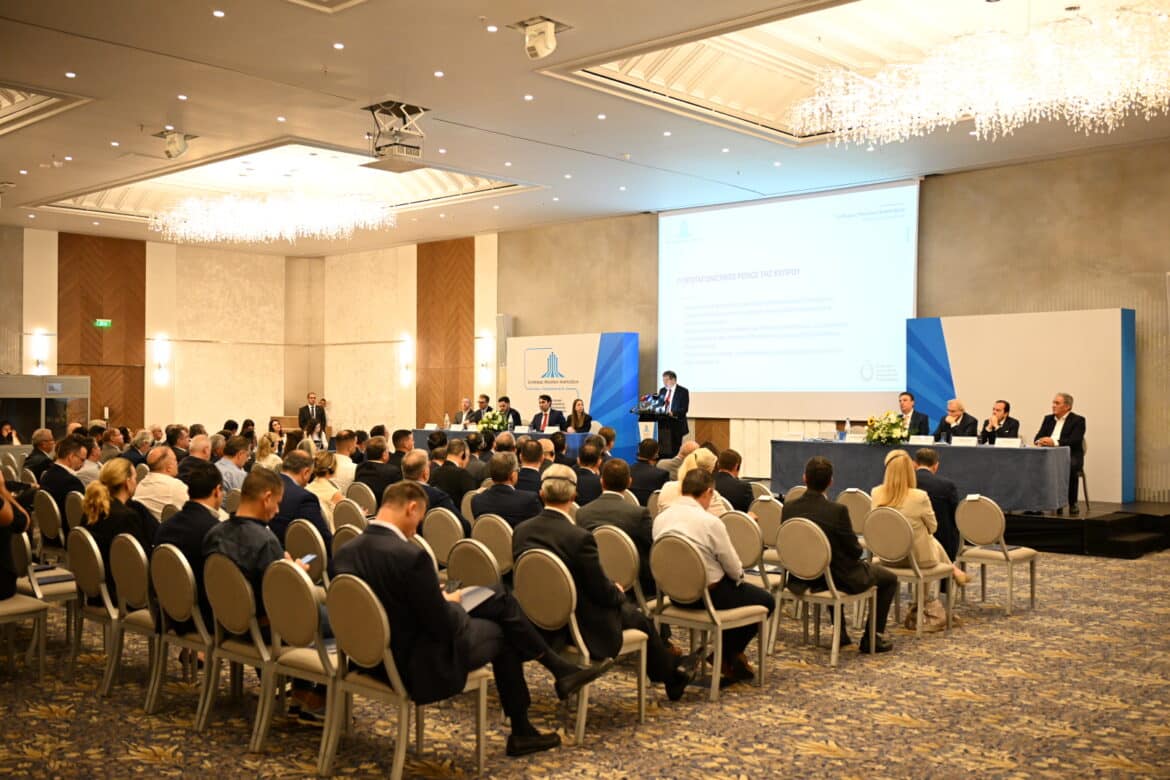
President Nikos Christodoulides on Monday urged closer cooperation between the government and the private sector to attract productive investment, accelerate major developments and address challenges including housing affordability, as he addressed the annual general meeting of the Association of Large Investment Projects in Nicosia.
Christodoulides said major developments played a decisive role in attracting capital, bringing in expertise, creating business opportunities and strengthening Cyprus’ international competitiveness.
“Large developments, through attracting capital, making use of expertise and mobilising a wide range of professional activities, contribute decisively to economic diversification, upgrading the country’s productive model and strengthening our international competitiveness,” he said.
He described the attraction of quality and productive investment as a strategic government priority, adding that efforts were under way to safeguard economic stability, improve the business environment and promote reforms intended to strengthen investor confidence.
“We are working to create the necessary framework so that attracting quality investment becomes an achievable goal,” Christodoulides said.
He pointed to what he described as positive results from the government’s investment promotion efforts, including business missions to several countries. He also announced that he would personally take part in another business mission to the United States towards the end of November.
“We are returning to the US at the end of November on a mission in which I will also participate, because we are seeing particularly increased investment interest from American companies,” he said, adding that the government would work with the US administration to present Cyprus’ opportunities and prospects.
Christodoulides said the country’s economic performance and growth outlook demonstrated its resilience, despite international uncertainty and significant challenges.
The government’s aim, he added, was to preserve and strengthen that momentum through responsible economic policy, prudent fiscal management and continued reforms.
However, he stressed that development should not be measured solely through economic indicators.
“For us, growth is not assessed only through economic indicators, but also through the opportunities it creates, the quality jobs it offers and, certainly, its contribution to improving citizens’ everyday lives,” he said.
The president identified affordable housing as one of the major challenges requiring cooperation between the public and private sectors.
He said businesses involved in large developments had the expertise, investment capacity and experience to help increase the supply of homes and develop new solutions that were both economically viable and socially responsible.
Improving the business environment and removing obstacles that delay investment were also key priorities, he said, particularly as Cyprus sought to strengthen its competitiveness.
Christodoulides highlighted efforts to simplify, digitalise and speed up licensing procedures, as well as the operation of the Business Facilitation Centre, which supports strategic developments.
Through these measures, the government was seeking to reduce bureaucracy and improve the efficiency of the state, making public services more accessible to citizens and businesses.
He also referred to the tax reform that came into force on January 1, 2026, saying it was intended, among other things, to strengthen the competitiveness of Cypriot businesses and create more favourable conditions for productive investment and growth.
“Our clear objective is to create an environment in which businesses can plan with confidence, invest with trust and develop with a long-term outlook,” he said.
Such an environment, he added, should attract quality investment that creates well-paid jobs and increases the added value of the Cypriot economy.
Christodoulides underlined the importance of continued dialogue with key business associations, saying the experience of its members and their understanding of market needs could help the government shape more effective policies and address longstanding distortions.
He said Cyprus had significant comparative advantages that the government was seeking to strengthen through strategic planning and a long-term approach.
The wider objective, he added, was to build a more productive, competitive and resilient economy that creates opportunities while ensuring that growth delivers tangible benefits for society.
“The state and the business community have distinct but complementary roles. One needs to work with the other. We must work together,” he said.
The government, he continued, would work towards maintaining a stable and transparent institutional framework that encouraged sound entrepreneurship and the attraction of productive, quality investment.
Businesses, in turn, had a responsibility to contribute to the country’s development by making use of opportunities through responsible practices, long-term planning and respect for society and the environment.
The association’s annual general meeting brought together the president, ministers, political party leaders and representatives, ambassadors, business and professional organisations, as well as members of the association.
The meeting provided an opportunity for representatives of the state and business community to discuss the conditions needed to support a more dynamic, competitive and sustainable Cypriot economy.
Association president Andreas Demetriades said the organisation’s longstanding mission was to help create the conditions needed to support development and attract quality, productive investment for the benefit of the economy and society.
He also stressed the importance of making effective use of Cyprus’ potential and comparative advantages to strengthen its growth prospects.
The association highlighted the need to ensure infrastructure keeps pace with expansion, while also addressing housing affordability and energy costs.
It called for a more flexible framework for major projects, arguing that this was necessary to support investment and the country’s wider economic prospects.
The meeting also included honorary awards for two people recognised for their longstanding contribution to the association.
The awards went to board member Theodoros Aristodemou for his contribution to the organisation and planning consultant Yiannos Papadopoulos for his longstanding support.