
Source: cyprus-mail.com
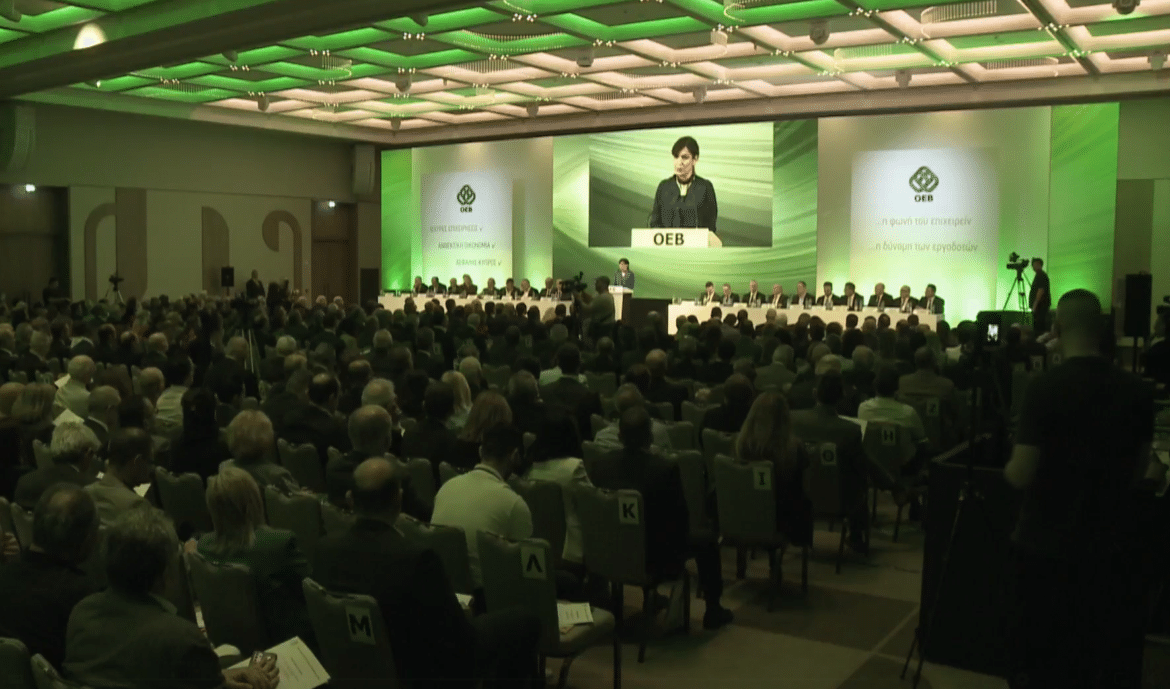
Greece and Cyprus must deepen business cooperation as Europe faces war, bureaucracy and competitiveness pressures, Federation of Hellenic Enterprises (Sev) executive committee president Rania Aikaterinari said on Tuesday, addressing the Employers and Industrialists Federation (Oev) annual general meeting in Nicosia.
Speaking on behalf of the Sev, Aikaterinari said the economic and political ties between Greece and Cyprus have remained strong throughout history, adding that this is even more important “in today’s environment, where uncertainty has become the new normal”.
“Greece and Cyprus stand together in the face of every challenge,” she said.
Aikaterinari said this was reflected in early March, when Cyprus faced unforeseen situations as a result of the war in the Middle East and Greece responded immediately “with the dispatch of military force” and, above all, by sending “a message of unity and support within Europe”.
She added that Greece’s support was not limited to the military level but also extended to diplomacy, referring to the European Council of March 19 and 20, where Greece raised the issue of the possible future activation of Article 42.7 of the EU Treaty.
The article stipulates that “in the event of an armed attack on its territory, the other Member States shall assist and assist it by all the means at their disposal”.
In a period of intense geopolitical developments, Aikaterinari said it is important for the EU not only to send a message of unity and solidarity, but also to ensure “a unified European approach based on deepening alliances and further strengthening its defence capabilities”.
At the same time, she said cooperation between Greece and Cyprus remains close at the economic level, particularly through Sev and Oev.
Aikaterinari said the two organisations have repeatedly warned that businesses across the European Union are operating in “a difficult and inflexible regulatory environment” which is affecting their competitiveness.
She said Cyprus and Greece also co-signed a joint letter by 22 member states to European Council president Antonio Costa, calling for more decisive measures to reduce the regulatory burden of European legislation.
Although Europe recognised the problem in early 2025, following the Draghi and Letta reports, Aikaterinari said it had “not moved quickly and decisively enough”, with most businesses still seeing no noticeable improvement.
She said this message was also conveyed by employers’ organisations during a meeting with European Commission President Ursula von der Leyen in February 2026, in which she participated together with Oev president George Pantelides.
Aikaterinari said Sev and Oev are also working closely within BusinessEurope to shape policies and solutions on critical entrepreneurship issues, sending letters to their political leadership with an emphasis on five priorities.
These, she said, include deepening the single market in order to reduce barriers to goods and services, which, according to the International Monetary Fund (IMF), correspond to internal tariffs of 110 per cent and 45 per cent respectively.
She also referred to the need to reduce dependencies and expand trade opportunities, saying Sev and Oev welcome the European Commission’s ambitious strategy to conclude agreements with Mercosur, India, Indonesia and Australia.
In addition, she said the two organisations are pushing for a stronger effort to reduce bureaucracy, strengthen private and public investment and innovation, and secure “competitive and predictable energy prices”, which she said “unfortunately still remain a demand”.
However, Aikaterinari said the war in the Middle East has made the challenges facing European businesses and industry even more intense.
She said these developments require “realism in European policies”, as well as speed of reaction in the taking of measures by national governments”.
At the same time, she said the new crisis is testing Europe’s ability to balance between “social cohesion, defense, and competitiveness”.
Referring to French president Emmanuel Macron’s recent visit to Greece, Aikaterinari said discussions focused on many of these issues and on how Europe must respond in a united way, with an emphasis on strategic autonomy, energy security, technological leadership and defence.
She said Greek-French strategic cooperation therefore acquires particular importance, as both the Greek Prime Minister and the French president had emphasised.
“Of equal importance is the promotion of the strategic partnership between Cyprus and France,” she added.
Aikaterinari said Sev is also working closely with Oev on discussions over the EU investment strategy in the context of the next European budget, the Multiannual Financial Framework for 2028-2034.
She described this as “a process consultations of paramount importance for our economies”, adding that Sev and Oev are joining forces within the MED-9 alliance of Mediterranean employers’ organisations.
The common path of Greece and Cyprus, she said, is also reflected in the close interdependence of the two economies and in their trade flows of goods and services.
Aikaterinari said Greece is one of Cyprus’ main trading partners and was the third export destination of Greek products in 2025, with a share of 6.8 per cent, after Italy and Germany.
She added that many Greek companies already have a strong presence on the island, particularly in banking services, energy, construction and retail.
To further strengthen bilateral business relations, she said Sev carried out an organised business mission to Nicosia in March 2025, in cooperation with institutional bodies and the Cypriot business community.
“In the near future, a corresponding business mission from Cyprus to Greece is expected,” she said.
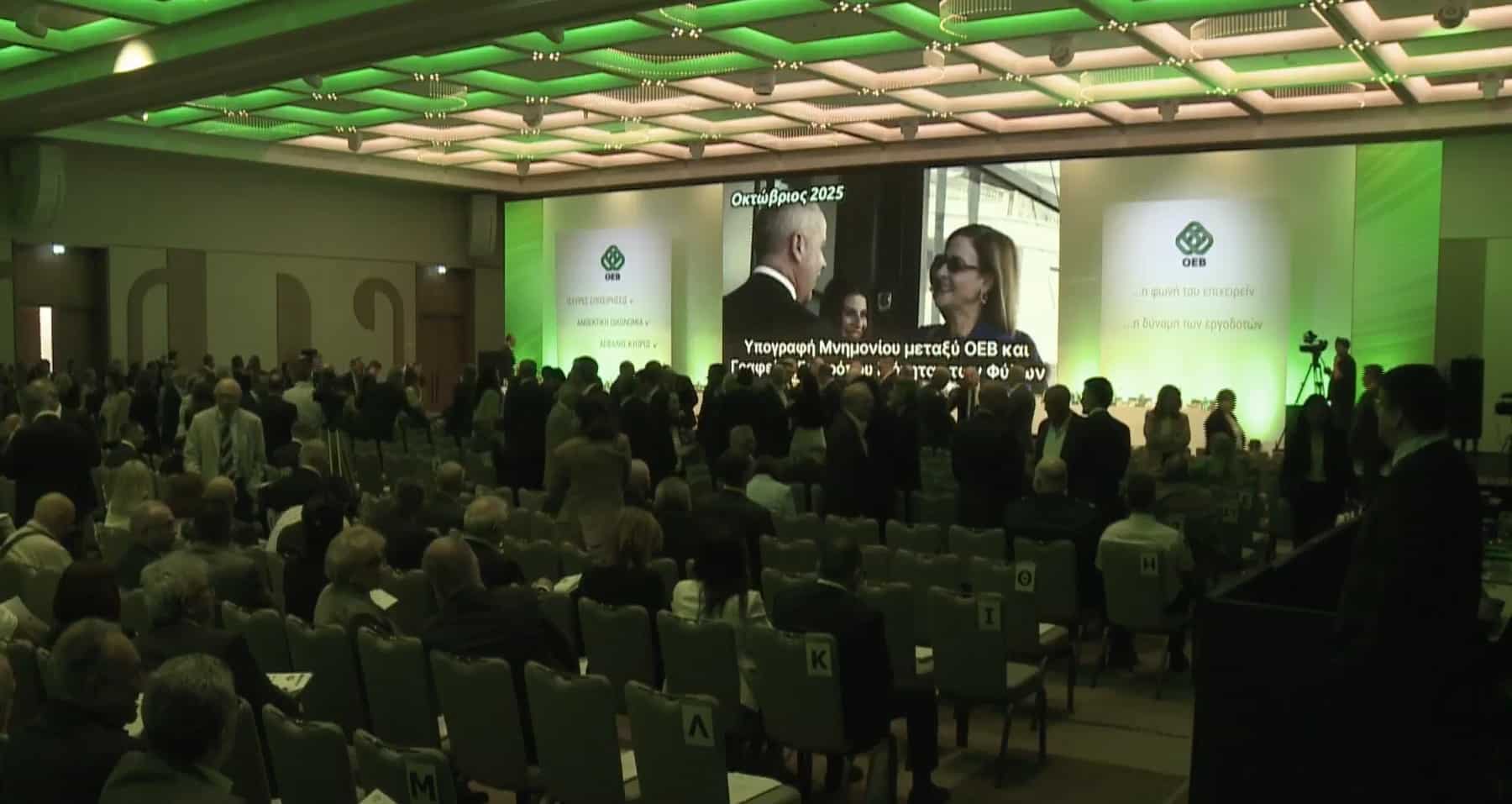
Aikaterinari also referred to the signing of a Memorandum of Understanding (MoU), saying it confirms the will of the two sides for systematic coordination, joint interventions at European level, exchange of know-how and joint actions to strengthen competitiveness.
Meanwhile, she said Cyprus, as the presiding country of the European Council, is demonstrating “efficiency and sobriety in an admittedly very difficult period”, with geopolitical turmoil following one crisis after another and security and stability now becoming the main issue.
She added that Greece will take over the EU presidency in the second half of 2027, saying it will have the opportunity to draw useful information from Cyprus’ experience.
Finally, she said Sev will host the BusinessEurope presidents’ conference and wants to use Cyprus’ experience “to organize this conference with the same success”.