
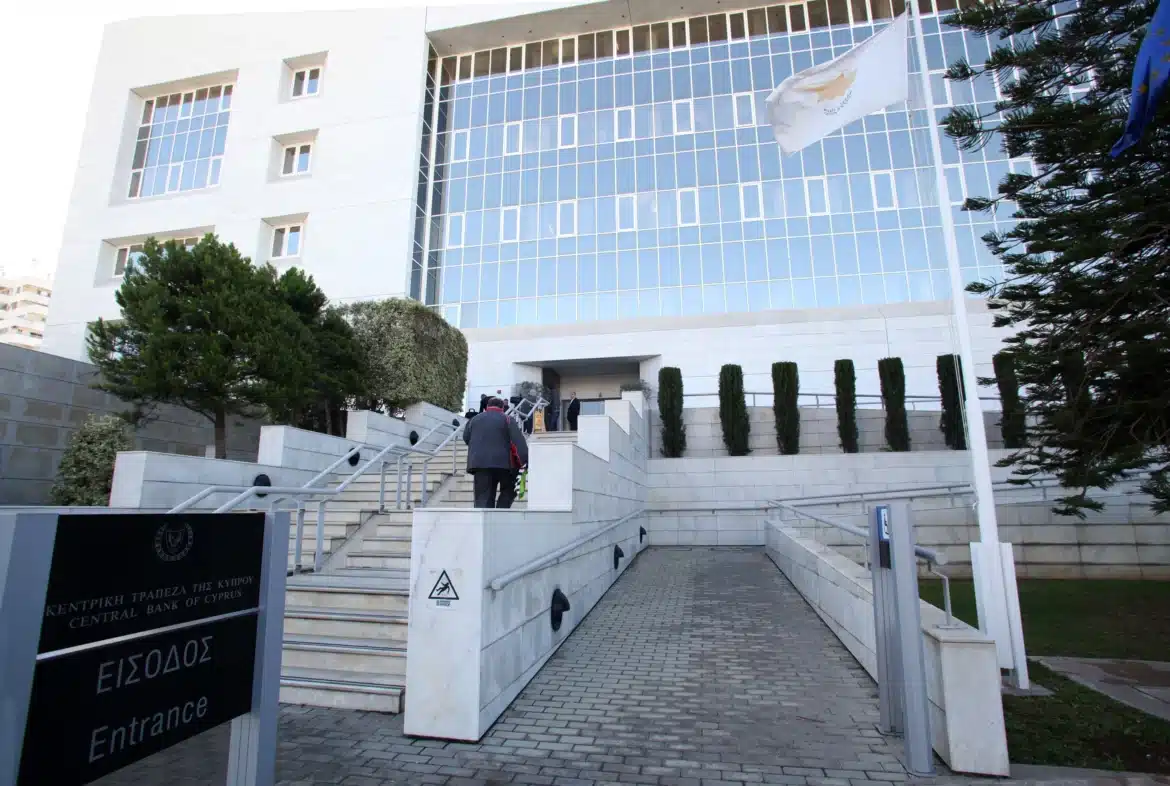
Source: cyprus-mail.com
The Central Bank of Cyprus (CBC) this week published a summary overview of its governance framework, outlining the structures, principles and decision-making mechanisms that underpin its operations in a move aimed at strengthening transparency and public understanding.
The document was released for informational purposes and provides a concise description of the governance arrangements that guide the central bank’s activities and support its mission of serving the public interest.
The CBC stressed that the publication is not a legal document and does not replace the legal and regulatory framework governing the institution.
The bank said it remains committed to the principles of transparency, accountability and good governance, which support public confidence and contribute to the stability of the financial system.
According to the document, the framework is continuously updated to reflect evolving governance practices and is intended to reinforce institutional accountability, transparency and operational effectiveness.
The publication is divided into sections covering the central bank’s general overview, decision-making bodies, internal control mechanisms and core governance principles.
The CBC was established in 1963 under Articles 118 and 121 of the Constitution of the Republic of Cyprus and operates under the Central Bank of Cyprus Law.
The institution performs a dual role, acting both as the national central bank and as an integral part of the European System of Central Banks (ESCB).
In its European capacity, the CBC contributes to the tasks entrusted to the ESCB under EU treaties and the ESCB and European Central Bank statutes.
The central bank also participates in the Single Supervisory Mechanism, the European Banking Authority, the European Systemic Risk Board, the Single Resolution Mechanism and the European Anti-Money Laundering Authority.
Its responsibilities include contributing to euro area monetary policy, managing the Republic’s official reserves, supervising licensed credit institutions and overseeing payment institutions, electronic money institutions, credit servicers and leasing companies.
The bank is also responsible for macroprudential oversight, promoting the smooth operation of payment and settlement systems, compiling statistics, acting as the Republic’s banker and resolution authority, combating money laundering and terrorist financing, promoting financial ethics and advancing financial literacy.
The CBC stated that its vision is “to be a leading organisation serving citizens”, while its mission is to safeguard price stability and support the Republic’s broader economic policy, subject to European obligations.
The institution prepares and publishes a strategic plan every three years, with implementation monitored every two months by the Executive Committee.
Organisationally, the bank comprises eleven units reporting directly to the governor, including departments responsible for financial supervision, payments oversight, financial stability, operations, technology, human resources, strategy, risk management and internal audit.
The position of deputy governor, although provided for under the Constitution, is currently vacant.
The governor serves as the bank’s highest executive authority, chairs the board of directors, the resolution authority, the personnel committee and the executive committee, and participates in both the Governing Council and General Council of the European Central Bank.
The governor is appointed by the President of the Republic for a five-year term that may be renewed.
The board of directors consists of the governor, the deputy governor, two executive advisers and five non-executive advisers.
It supervises the bank’s management and determines policy in areas outside the remit of the ESCB.
Board members are appointed by the cabinet for renewable five-year terms, with the board meeting at least twelve times a year.
The board also acts as the Resolution Authority, handling matters concerning the resolution of Cypriot credit institutions and implementing decisions affecting banks directly supervised by the European Central Bank.
The CBC said it applies a three-line internal control model to safeguard effective governance and operational integrity.
The first line consists of operational management, while the second line is provided by the independent risk management and compliance functions.
The risk management directorate oversees financial, operational, cyber and business continuity risks, while the compliance service ensures adherence to national and European rules and promotes ethical standards.
The third line of defence is the internal audit directorate, which provides independent assurance and advisory services aimed at strengthening governance and risk management.
Several governance committees support the board, including audit, risk management, personnel and sustainability committees.
The Sustainability Committee assists the board in implementing the central bank’s sustainability strategy and supporting the institution’s contribution towards achieving net zero carbon emissions.
The Executive Committee, established by the governor, focuses primarily on strategic planning, budgeting and emergency issues and meets every two months.
Meanwhile, the Operations Committee deals with matters relating to human resources, technology, organisational issues, health and safety, operational risks and business continuity.