
Source: hubspot
Brand marketing has always been about controlling the narrative, so that the story your company tells about itself is the one the market hears. That job has gotten harder.

Answer engines construct descriptions of your brand from what’s been written about the brand across the web. That includes reviews, comparison pages, forum discussions, and third-party editorial coverage. The result is often a version of your brand that doesn’t match what you’d choose to say. Brand teams gaining an edge are actively managing how AI describes them.
Monitor how answer engines are describing and representing your brand.
The first step in brand narrative management is to know what the AI is saying. That means understanding how your brand is described across different answer engines, which competitors are cited alongside you, and whether the language in AI answers reflects your current positioning.
When brand teams don’t have visibility into AI-generated descriptions, they can’t respond to inaccuracies or gaps until a stakeholder notices them in the wild. That wait-and-see approach comes at a cost, because by the time you’re correcting the record, the description has already shaped buyer perception.
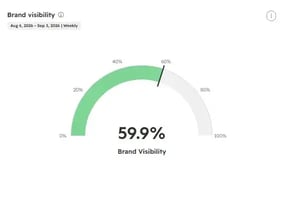
HubSpot AEO‘s Brand Visibility Dashboard shows how your brand is appearing in answer engines, including your AI visibility score, share of voice against competitors, and the citations driving those appearances. You can see which sources are shaping AI descriptions of your brand and identify where the narrative diverges from your messaging.
Within one month, HubSpot’s mention rate went from 0% to 33.5% in France and 17.1% in Germany, according to HubSpot’s marketing team.
Knowing how your brand is being described is the foundation. The next step is creating the content that shapes those descriptions.
Build owned content that shapes how answer engines position your brand.
Answer engines cite authoritative, well-structured content. When your owned content, such as positioning pages, comparison guides, and category explainers, is optimized to earn citations, it becomes part of the source material that shapes AI-generated brand descriptions.
Brand content that was written for human readers and search engines may not be structured to earn AI citations. The gap between your intended narrative and the AI-generated version stays open without a process for auditing and updating that content.
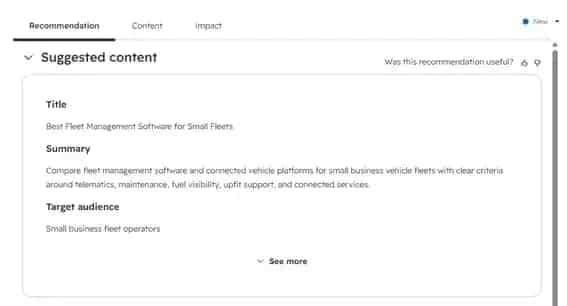
HubSpot AEO surfaces Recommendations for specific content changes that are likely to improve your citations and brand visibility score. You can prioritize owned content updates based on which gaps are most directly affecting how your brand is described in AI answers.
Building the content only gets you halfway. You still have to track whether it’s actually shifting how your brand shows up.
Track how brand visibility improvements correlate with awareness and consideration.
Brand marketing is often measured by proxies like awareness surveys, share of voice in earned media, and branded search volume. AI visibility score adds a new signal that occurs earlier in the buyer journey: how prominently your brand appears when buyers are actively forming their category understanding.
Changes in AI-driven awareness are invisible in your reporting without a consistent framework for tracking brand visibility in AI results. That makes it difficult to connect brand investment to AI presence, or to demonstrate progress to leadership.
HubSpot AEO tracks your AI visibility score, citations, and share of voice over time, giving you a longitudinal view of how your brand’s presence in AI results is changing. With Marketing Hub, that AEO data sits alongside your campaign metrics, so you can connect shifts in AI visibility to the marketing work driving them.
The narrative your brand has built over years is worth protecting in AI results, but protection requires visibility into what’s there. The infrastructure to monitor, respond, and improve is the same work brand teams already do. It just needs to be pointed at the right channels.