
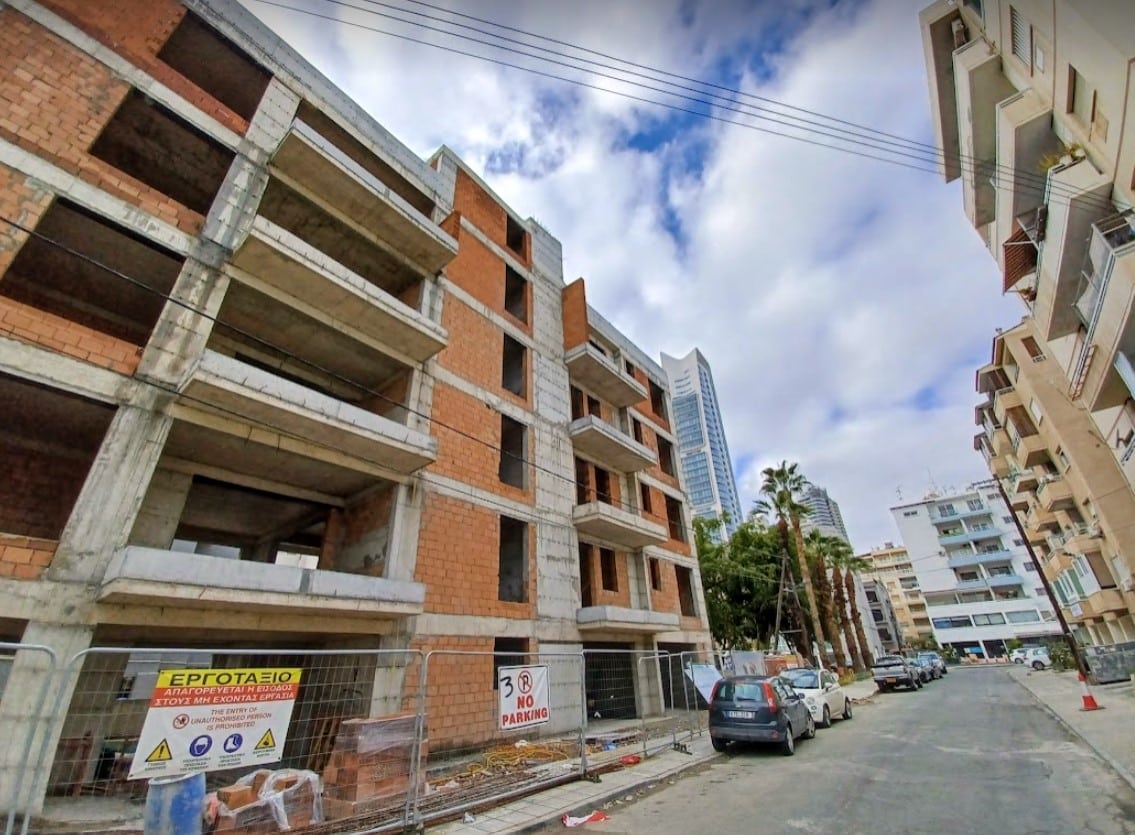
Source: cyprus-mail.com
Rising construction costs in Cyprus have surged by 10 per cent over the past two months, with a five-year increase reaching 35 per cent, according to the president of the Cyprus Federation of Building Contractors Associations (Oseok), Stelios Gavriel.
“The increases are attributed both to geopolitical developments in Iran and the rise in energy prices, as well as to the higher cost of emissions allowances burdening raw material industries,” Gavriel told the Cyprus News Agency (CNA).
He added that materials most affected include iron, aluminium and steel, which have seen notable price pressures.
According to the statistical service, the construction materials price index for April 2026 stood at 120.67 units (base year 2021 equals 100), marking an increase of 0.64 per cent compared with the previous month.
Compared with April 2025, the index recorded a 1.38 per cent increase, reflecting ongoing upward trends across the sector.
By main product category, increases were recorded in electromechanical goods at 2.29 per cent, metal products at 1.81 per cent, wood, insulation, chemical and plastic products at 1.76 per cent, minerals at 1.59 per cent, and mineral products at 0.06 per cent.
For the period January to April 2026, the index rose by 1 per cent compared with the same period in 2025.
The statistical service also reported that iron and steel products rose by nearly 2 per cent compared with the previous month, while aluminium products recorded a slight increase.
“The rise in construction costs began with the crisis caused by the war in Ukraine, the subsequent energy crisis, and continues with the war in Iran and the increase in oil prices,” Gavriel said.
“These factors do not help reduce costs but instead maintain them at high levels,” he added.
He explained that the final impact on construction costs and therefore property prices depends on which materials are affected.
“If iron increases, because it is widely used in construction, the construction cost rises more,” Gavriel said.
Despite these pressures, construction activity remains at particularly high levels in both public and private projects across Cyprus.
“The data available to Oseok, along with market indicators, show a continuation of the sector’s growth trajectory during the first months of 2026,” Gavriel said.
In terms of property sales, the largest increase is recorded in Larnaca at around 40 per cent, while Nicosia follows with a rise of approximately 30 per cent.
At the same time, Limassol and Paphos continue on a steady upward path, maintaining their strong momentum in the property market.
Gavriel noted that the increase in Nicosia is mainly driven by domestic buyers, alongside growing interest from foreign investors and companies.
“The capital is seen as an attractive option due to the affordable cost of living and the concentration of administrative and business activities,” he said.
He also pointed out that the property market is adapting to new conditions, with increased demand for smaller homes and apartments.
This shift is linked to higher construction costs and new energy requirements, which make the development and purchase of large homes more difficult.
Modern constructions now require energy upgrades to category A, thermal insulation materials, energy-efficient frames, photovoltaic systems, and smart technologies, all of which raise initial costs.
However, these investments are expected to reduce long-term operating costs for households.
Labour also plays a role in shaping construction costs, with the departure of experienced workers in previous years affecting productivity and increasing labour expenses.
Efforts are now underway to cover workforce needs with employees from third countries.
“They will help increase productivity,” Gavriel said.
He added that improved productivity could contribute to easing construction costs over time.