
Source: cyprus-mail.com
A shortage of almost 39,000 qualified officers is adding to the challenges facing international shipping, with International Chamber of Shipping (ICS) Secretary General Thomas Kazakos calling for coordinated action on seafarer recruitment, training and the industry’s transition to cleaner fuels.
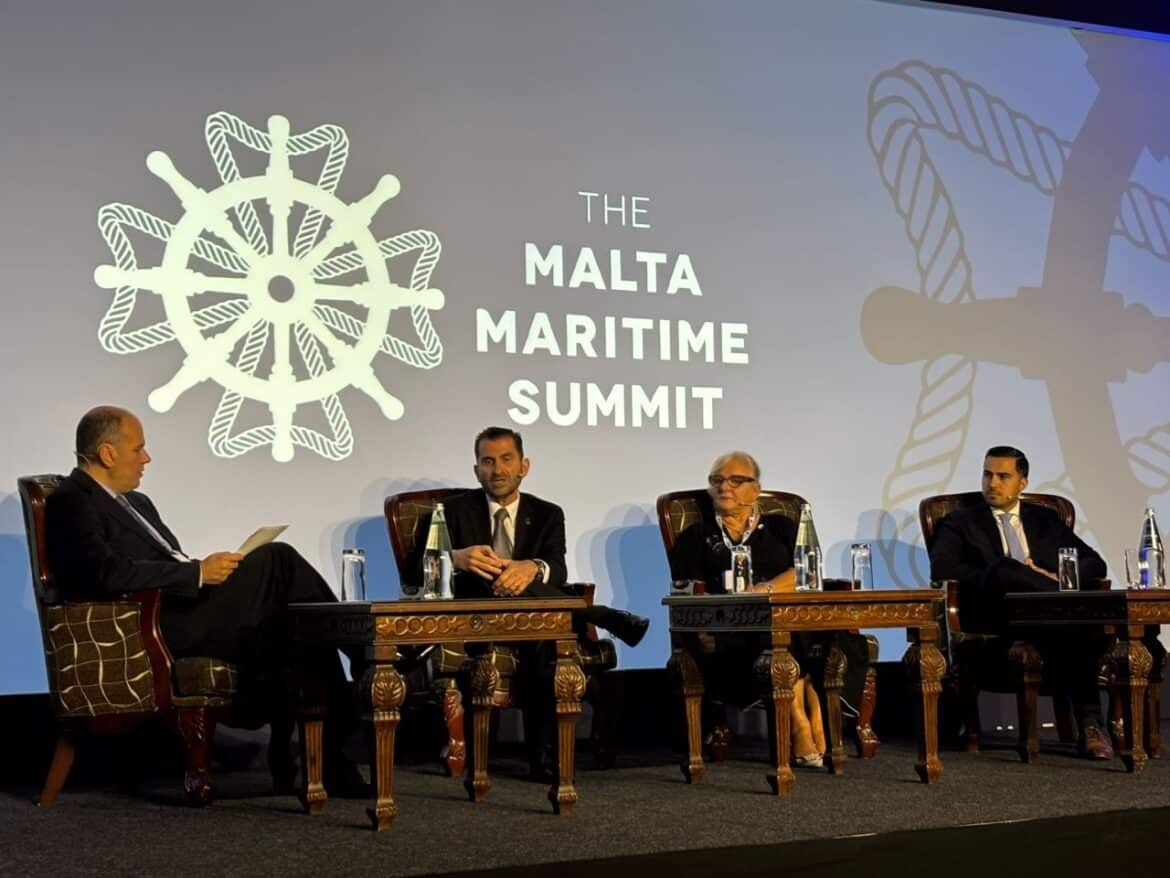
Kazakos raised the issue this week, at the Malta Maritime Summit, where he took part in a discussion examining the human impact of shipping’s green transition and the need for international cooperation.
He argued that decarbonisation requires a common global regulatory approach, rather than a collection of national and regional measures, and reaffirmed the industry’s commitment to working with the International Maritime Organisation (IMO).
The IMO, he stressed, remains the appropriate organisation to develop international rules for a sector whose operations extend across national borders.
His comments come as governments continue negotiations over the IMO Net-Zero Framework, a proposed set of measures designed to reduce greenhouse gas emissions from international shipping.
The framework would introduce a global marine fuel standard and an emissions pricing mechanism. However, its adoption was postponed in October 2025, allowing governments more time to negotiate the proposals.
Further talks were held in September 2026, while another round is scheduled for November as countries seek agreement on the industry’s reduction requirements.
The discussion in Malta also brought attention to a problem facing shipping companies worldwide: finding enough qualified people to operate their vessels.
Figures from the BIMCO-ICS Seafarer Workforce Report 2026 put the global shortage at approximately 39,100 STCW-certified officers, alongside a surplus of 56,890 ratings.
The report estimates that 2.57 million seafarers are employed across 85,148 merchant vessels worldwide.
It also projects that the industry will need 113,735 additional officers by 2030. Meeting future demand would require around 22,747 officers and 8,475 ratings to enter the workforce each year.
For Kazakos, the figures emphasise the need to make shipping a more attractive profession, particularly for younger generations considering a career at sea.
He called on governments, shipping companies and trade unions to work together on recruitment and retention, with greater attention paid to career development and the conditions experienced by seafarers.
He also argued that seafarers should be recognised as key workers, rather than treated as commodities, and urged governments to establish national programmes that actively support maritime education and recruitment.
Providing clearer routes into the profession, he maintained, would help prospective seafarers see shipping as a career offering opportunity for long-term development.
The need for skilled personnel is becoming more important as shipping companies adopt new fuels, digital systems and increasingly advanced vessel technologies.
These developments are changing the training requirements for crews, bringing maritime education into wider discussion about the industry’s environmental commitments.
Kazakos therefore placed particular emphasis on the ongoing review of the International Convention on Standards of Training, Certification and Watchkeeping for Seafarers (STCW), saying its provisions must remain relevant to the industry’s requirements.
The convention establishes minimum international standards for maritime training and certification.
Its comprehensive review examines more than 400 identified gaps, including cyber security, technological developments, mental health, workplace safety and the skills required to operate vessels using alternative fuels.
The IMO moved into the revision phase in February 2026, with the process expected to continue towards 2029 or 2030.
At the same time, work is progressing on training guidelines for crews operating ships powered by ammonia and methanol, reflecting the different technical and safety requirements associated with alternative marine fuels.
The industry is also considering how experienced ratings could progress into officer positions through structured training programmes, helping to address the shortage while providing additional opportunities for career advancement.
Kazakos made his remarks during the session ‘The Human Side of the Green Transition’, held under the theme The Green Transition: From Compliance to Circularity.
Joining him were Shiv Tripathi, dean of the Faculty of Economics and Business Administration at the Berlin School of Business and Innovation, Rave Al-Chamary, product manager for energy-saving technologies at Wartsila, and Maja Markovcic Kostelac, executive director of the European Maritime Safety Agency (EMSA).
Their discussion formed part of the Malta Maritime Summit 2026, held from October 5 to 9 under the theme The Voice of the Industry.