
Source: in-cyprus.philenews.com
Russia has weaponised disinformation to systematically destabilise its adversaries, but the threat extends far beyond Moscow’s influence operations, according to a leading expert on political communication.
While Western governments and media focus heavily on Russian interference, other major powers are deploying equally sophisticated manipulation tactics through different channels, Colin Alexander, Professor of Political Communication at Nottingham Trent University, told Phileleftheros.
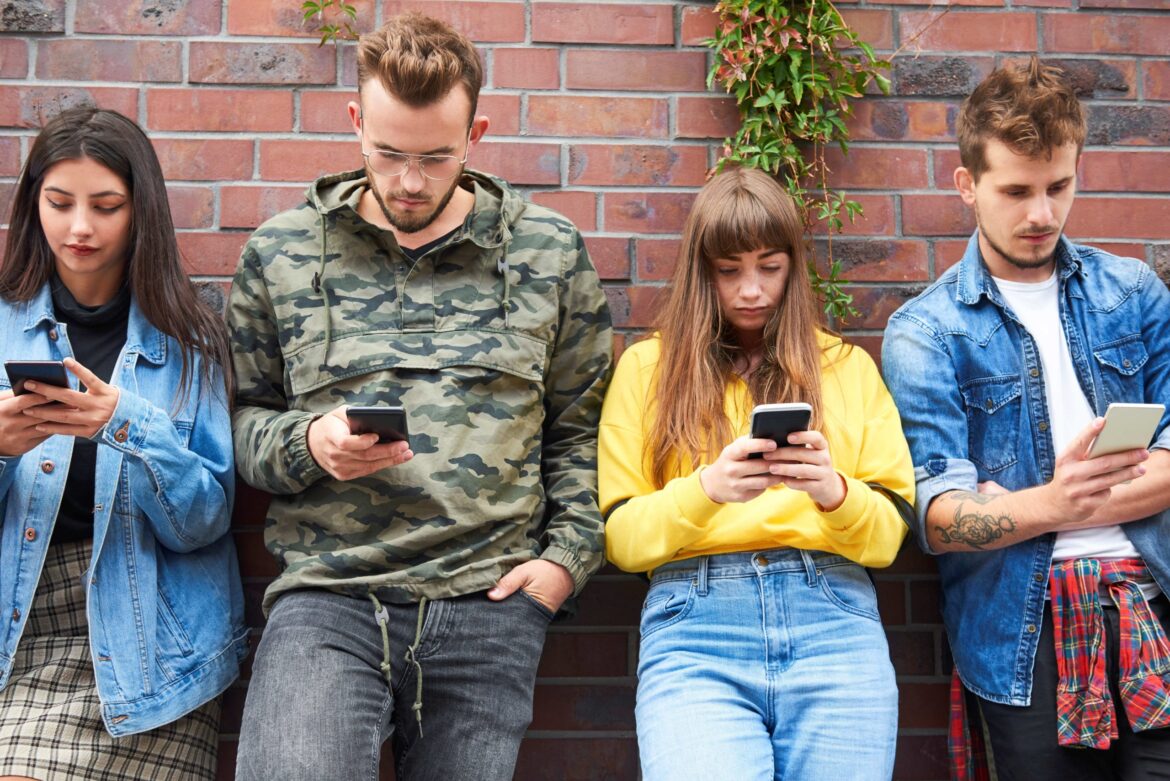
China’s TikTok platform exemplifies this broader challenge, Alexander argued, describing it as deliberately designed to weaken users’ cognitive abilities and critical thinking skills. He noted that TikTok “dumbs down” users, “creates passivity and is also designed to be addictive and consequently to cause mental disruptions”.
The digital age has transformed disinformation from a traditional propaganda tool into a complex, multi-actor battlefield where state and corporate interests converge to exploit social divisions and individual vulnerabilities.
But Alexander warned against placing blame solely on external actors, arguing that democratic societies and their citizens bear responsibility for how they consume and share information. “These disinformation campaigns are effective to the extent that we allow them to be,” he said.
How does Russian information warfare differ from traditional propaganda?
Well, disinformation is a strategy that someone can use to conduct propaganda. It involves a selective narrative of reality or a narrative that helps achieve specific goals. It’s a conscious choice to use disinformation as part of one’s strategy. The second part of your question refers to what Russia is doing in the modern era. I’ll start by saying that Russia is not the only player or state engaged in such strategies. However, over the past two decades or so, as Russophobia has re-emerged in Western countries due to the war in Ukraine, media and governments dedicate significant time focusing on what Moscow is doing. There are many centers of disinformation. And I’m not an expert in Greek-Cypriot politics, but I’m quite certain that various actors engage in disinformation campaigns in your region as well.
So is the West exaggerating when it says Russia is conducting an information war against it?
No, I’m not saying we’re exaggerating about this. Not at all. I believe it’s a significant problem. However, Russia is only one of many actors, both within Western Europe and beyond, trying to manipulate citizens. You know, the reality is that TikTok is partially owned by the Chinese state and, although it may not engage in specific disinformation campaigns, it nevertheless causes massive attention distraction, particularly among young people. It could be argued that it dumbs them down, creates passivity and is also designed to be addictive and consequently to cause mental disruptions. I’m not arguing that it’s necessarily part of a disinformation campaign, but it is a campaign that seeks to weaken the user and their individual and collective consciousness.
So China is another disinformation actor?
The fact is that China has designed a social media platform that offers no benefit, but was instead designed in such a way for Westerners as well as for the Chinese themselves. Yes, it encourages narcissism, individualism, as it consists of short videos of people intensely focused on themselves, rejecting everything else. You asked if we’re exaggerating and the answer is no, because whether it’s Russian disinformation or content from digital platforms, much of it doesn’t benefit us. It’s not about collectivity, it’s not about consciousness-raising, it’s not about education.
Are all countries equally vulnerable to this disinformation, wherever it comes from?
I would say we shouldn’t think of it in terms of countries. Education and educational level play a role in how vulnerable some people are. On the other hand, many are very intelligent but naive – they lack critical thinking. They know a lot but don’t necessarily understand society or make assumptions that aren’t based on solid foundations. So everyone is vulnerable to a form of pseudo-stupidity. We all have it to some degree. At the same time, there’s something called common sense that doesn’t have so much to do with educational level. That’s why the issue isn’t that one country is more vulnerable than another. Besides, we live in an era where traditional borders and state boundaries are no longer as important, certainly not as they were 40-50 years ago, especially regarding information flow.
Let’s return to Russia though. What are the common techniques it uses to interfere in other countries?
Vladimir Putin’s strategy since taking power in 2000 has been what I call mischief-making on the international stage. He uses a very old but well-tested path: if you are militarily and economically inferior to your opponent – and Russia is – then you create problems in a way that helps you balance the competition. Thus, the Russian strategy of mischief-making, with disinformation as its key element, aims to destabilise its adversaries. By destabilising, I mean ensuring that their societies are not as cohesive as they could be. The logic is that if you weaken the opponent from within, then they are less powerful when competing against you. For example, in the case of the US, one weakness is racial relations; in Britain, the emphasis is on class. The Russians identify what weaknesses already exist and use them. It doesn’t matter whether it’s race, gender, age or religious discord – whatever the society’s sensitive point is, they use it to divide and exploit it for their own benefit or to weaken the opponent. As for the method, there’s now a clear shift from traditional media, as was done in the 2000s, exclusively to the digital space. Russia has an army of bots (fake accounts) and creates fake news and things that are convincing but untrue. However, there are also forms of digital sabotage.
Is this why we see Russian involvement in many electoral processes in other countries?
As I’ve already said, Russia is quite good at recognising weaknesses within societies and that’s why it focuses particularly on elections. In recent years there have been many reports of its interventions in various countries’ elections, while it doesn’t need to worry because it’s an authoritarian regime that imprisons and eliminates its political opponents, as happened with Alexei Navalny. However, for free and fair democracies, elections are points of vulnerability, which Moscow exploits.
Are there specific rhetoric or narratives that Russia uses, like other actors in disinformation campaigns against Western countries?
They exploit narratives that already exist within these countries. So it’s like a football game. When opponents identify, for example, that the right-back is the weakest player on the other team, they focus on him. Something similar happens. Whether it’s the state mechanism, intelligence services or other players, it all comes down to what the weak point is. And they use analysis, behavioral sciences – anything that provides them with data.
Additionally, propaganda theory says you must be flexible, adapting your strategy according to what already exists. For example, if you go to a Muslim-majority country and talk about the threat of a religion that no one actually follows there, that would be a completely ineffective communication strategy. So you have to work on what people already fear. In Britain, for example, there’s quite a large discussion around immigration and whether asylum seekers pose a threat. This becomes a point of vulnerability and discord. Russia’s goal logically is to extend that crack and strengthen the conflict around that issue.
You’ve said there are many disinformation actors. Do you see cooperation between them?
Not in the sense that they all sit together in a room or make a Zoom call to coordinate. What they do, especially state-supported actors, is conduct extensive analysis. That is, they monitor each other, observe what doesn’t work and what works, and then copy it. Just as happens with advertising and marketing in the corporate sector. And from there they get ideas to benefit. Some of these work, some don’t. It’s the same as with any advertisement: there’s always an element of randomness and sometimes there’s the element of unintended consequences. One of the key things we see from Russia is that they always, always deny everything. In reality, this denial is part of the propaganda, the game of creating confusion. It’s as if they deny but simultaneously wink, as if saying “yes, yes.”
Dangerous to blame outsiders
What are the consequences of disinformation campaigns?
The answer is quite complex. Someone could argue that the consequences aren’t absolutely clear, because the answer depends on how one ideologically interprets people’s responsibility toward themselves and their personal will. On one hand, we can blame certain actors or a country and say they’re responsible for the disinformation campaigns they conduct. On the other hand, this isn’t always a satisfactory answer. Because we also have the responsibility to take care of ourselves and our wellbeing. And these campaigns are effective to the extent that we allow them to be. I recognize that these actors have extensive knowledge in how to manipulate. From communication studies, social psychology, linguistic strategies, even down to the “choreography” of how the campaign will be set up. You understand we’re talking about people with very high manipulation capabilities.
But I don’t think it’s satisfactory to simply say that external actors are to blame. Because what we want, even if it sounds utopian, is to have free-thinking people, critically thinking people, who can protect the integrity of their own minds. If you simply say the responsibility lies out there, not in me, then that’s dangerous because it doesn’t encourage the individual to take responsibility for themselves. There must be a balance. Traditional media and politicians do this – they say Russia is to blame. Yes, it’s to blame, but only if we allow it to be.
You’re right when you say every individual has responsibility. But nevertheless, there are consequences: for democracy, for social cohesion.
Of course, there are consequences. And I don’t deny that. Unfortunately, many people in society are guided by their ego. Thus, disinformation proves effective because they want it to be true. And they don’t devote the necessary time and effort to verify what is actually true and what isn’t. And to tell the truth, we humans, I think, overestimate how much we love the truth. Very often we prefer convenient lies to uncomfortable truths. And our ability to deny things that harm us is quite strong.
Therefore, what is the way for Western societies to effectively address foreign disinformation?
Well, your question starts from the assumption that disinformation is imposed on us from outside and that we are not also distributors of information and disinformation ourselves. In reality, however, we exist within a global disinformation environment. One of the reasons – and this is my personal opinion – why we accept disinformation more than in the past and perhaps don’t value truth as much as we should, is because in the digital age we are all propagandists. In the past, propagandists were newspaper owners or politicians; they weren’t members of the public. But in the digital age we all have access to a platform, an application, in some way, and most of us use it to create an image of ourselves that isn’t true, or is oversimplified.
We filter our photos and upload only positive moments from our lives. Everything goes through a filtering process. And because we create these knowingly inaccurate or oversimplified narratives about ourselves, when others – governments, companies, charities, NGOs – do it, there’s an element of acceptance. It’s as if we say they’re simply behaving like us. And so our moral reaction isn’t perhaps as strong as it used to be.
Weakening of critical thinking
Why do people tend to believe fake news, even when it’s glaringly false?
The answer depends on the role news plays in people’s lives. The traditional role of journalists – verification, accountability, information – has changed. So has the public. Decades of research show that when people consume news, they are often in a state of strong bias. That is, they search for an echo of the world as they already perceive it. If, for example, someone has right-wing political beliefs, they will buy a newspaper or visit a website that reflects these views. And reading something, they’ll say the world is as I imagine it. Here comes the concept of satisfaction, since people consume news to be satisfied and not to study and try to see things differently.
What role do platforms play?
Platforms already play a significant role in addiction, in weakening critical thinking. There’s extensive evidence that social media applications have been designed to be addictive. They’ve been designed based on what’s called “partial reinforcement”: you’re not rewarded every time, but this is exactly what addicts you to scrolling. You become addicted to uploading something and then checking how many likes it got, how much satisfaction you received. A continuous gratification that is very powerful. They use various methods because they want to continuously bring content to their platforms; this brings them more money and makes them more attractive to advertisers. And we, as an audience, become more stupid as a result.
Read more: