
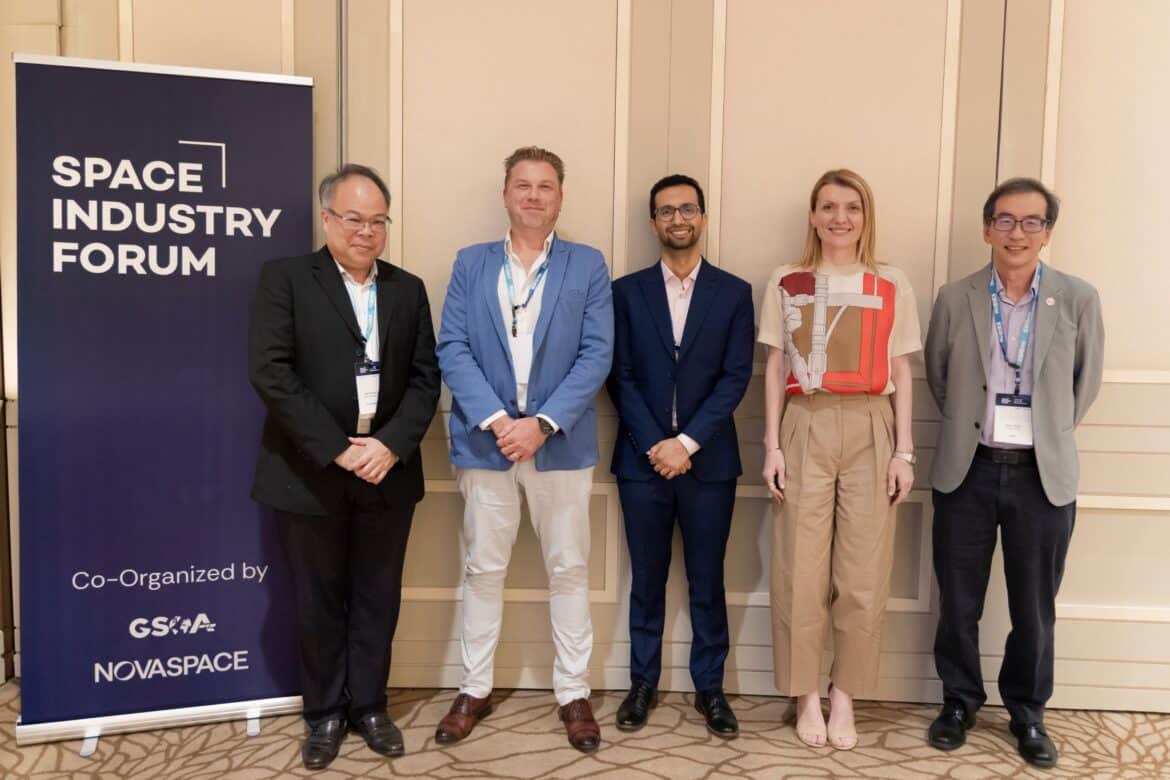
Source: cyprus-mail.com
Satellite connectivity is no longer simply about keeping ships, businesses or remote operations online. It is increasingly becoming part of the infrastructure on which critical decisions, digital operations and autonomous systems depend.
This was the message shared by Tototheo Global CEO Despina Panayiotou Theodosiou, who took part in the Space Industry Forum in Singapore, a high-level gathering co-organised by Novaspace and GSOA.
The forum was held on May 19, at The Fullerton Hotel in Singapore, bringing together senior executives, policymakers and industry leaders from the satellite and space sector.
According to the organisers, the event was designed as a platform for “high-level networking, strategic dialogue and partnership-building”, with discussions covering connectivity, direct-to-device services, government space strategies and NewSpace developments.
“Last week, I had the pleasure of participating in the Space Industry Forum in Singapore, joining industry leaders to discuss the evolving role of satellite infrastructure in enabling resilient, secure, and operationally critical connectivity across global industries,” Theodosiou said.
For Tototheo Global, whose work is closely linked to maritime and enterprise communications, the discussion comes at a time when satellite services are being asked to do far more than provide coverage in remote areas.
Instead, they are becoming part of the digital backbone of industries that need reliable data, secure systems and continuous operations, particularly beyond the reach of terrestrial networks.
Theodosiou said it had been “a pleasure” to join moderator Sia Kheng Yok, Senior Advisor at AAIS, alongside Mark Wong, SVP and Head of Group Strategic Planning at ST Engineering, Jason Buckalew, VP and Head of Asia Pacific at Gilat, and Ishan Basyal, Director for Programme Delivery at SpeQtral.
During the discussion, she said she shared perspectives from Tototheo Global on “the increasing importance of multi-network architectures, interoperability between satellite and terrestrial systems, and the operational shift from connectivity as a communications layer to connectivity as critical infrastructure supporting real-time decision-making, digital operations, and autonomous capabilities”.
That shift is particularly important for the maritime, energy, enterprise and government sectors, where the ability to move data securely and without interruption is becoming central to both efficiency and resilience.
“As demand accelerates across maritime, enterprise, energy, and government sectors, the industry must continue focusing on network resilience, cybersecurity, seamless integration, and scalable service delivery capable of supporting increasingly data-intensive operations,” Theodosiou said.
The wider forum also reflected how quickly the satellite sector is changing. According to GSOA, the Space Industry Forum builds on the legacy of the AVIA Satellite Industry Forum and was positioned as a senior-level gathering ahead of Asia Tech x Singapore, setting the tone for a week of space-focused discussions.
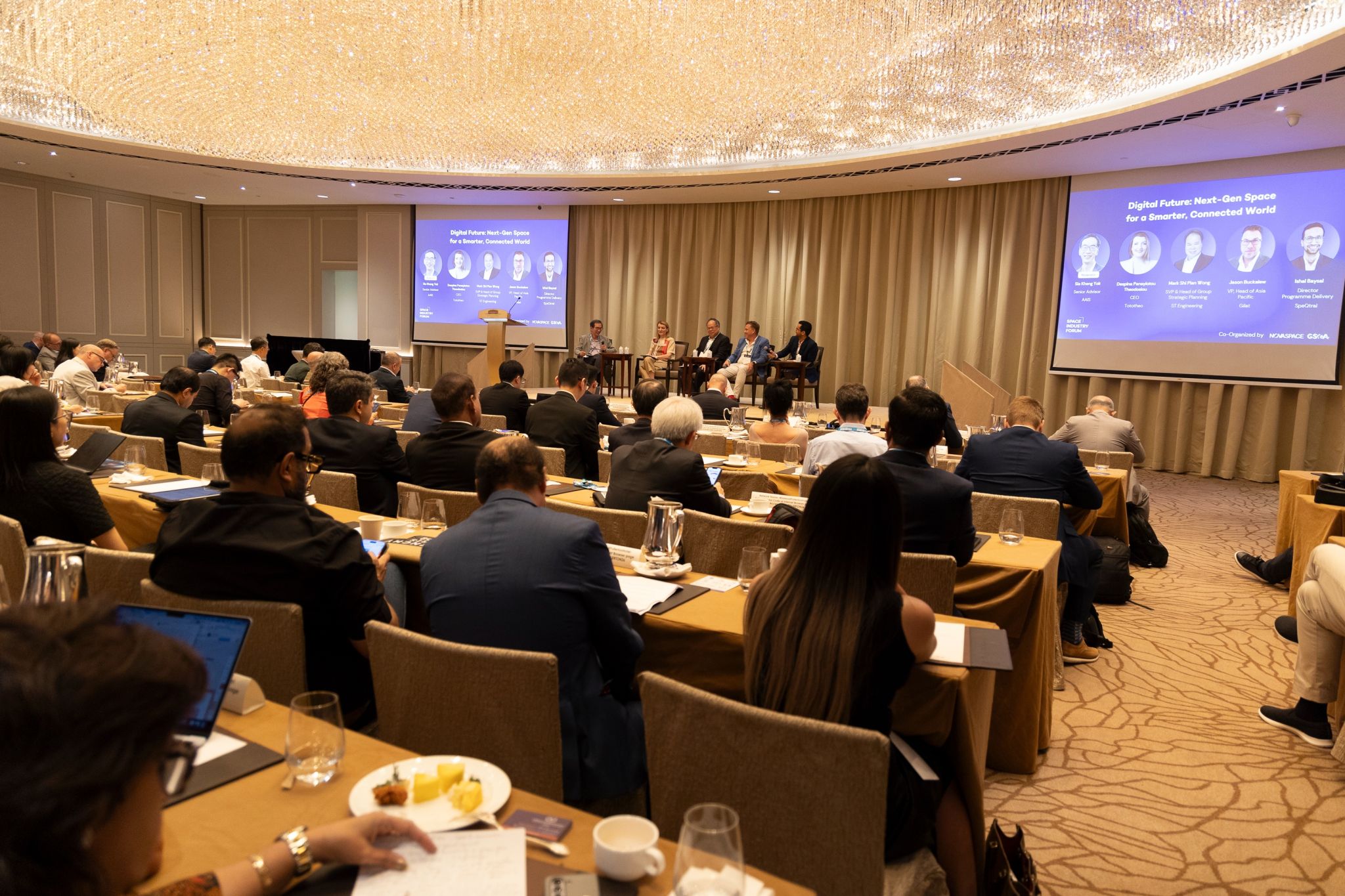
Its agenda focused on the technologies and commercial models now reshaping the industry, from satellite connectivity and direct-to-device services to NewSpace investment, government strategies and the convergence of terrestrial and satellite networks.
“The pace of technological convergence across LEO, GEO, private networks, cloud infrastructure, and edge computing is transforming how industries operate beyond the reach of terrestrial networks,” Theodosiou said.
She added that “collaboration across the ecosystem will remain essential to unlocking the full value of these technologies”.
Theodosiou also thanked Novaspace and GSOA for organising “a highly relevant and technically insightful forum that brought together stakeholders from across the satellite and space ecosystem”. She said the event had offered “an excellent exchange of views” and thanked the organisers and fellow panellists for the discussion.