
Source: in-cyprus.philenews.com
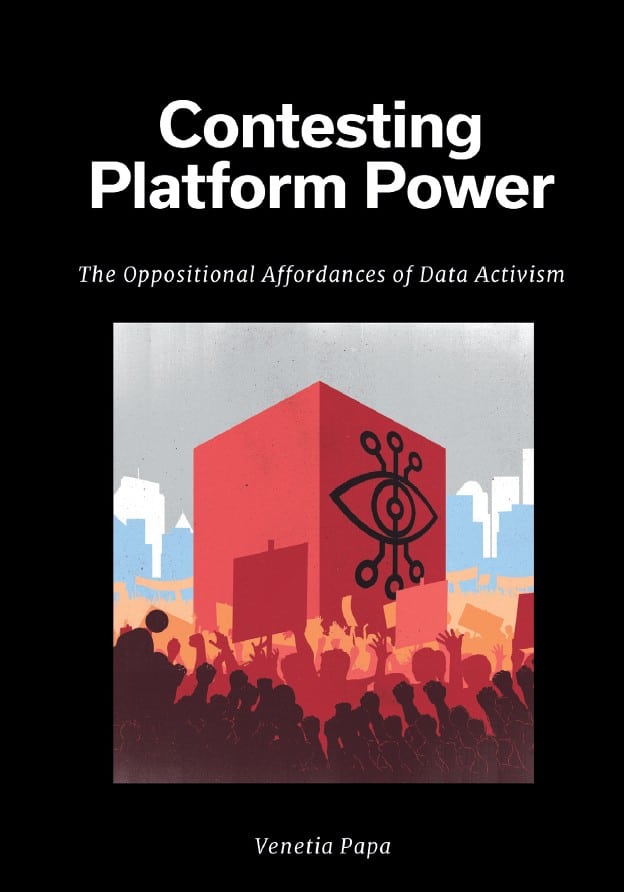
The digital age has brought with it a new, powerful and largely invisible form of power, exercised through platforms, algorithms and, increasingly, artificial intelligence. But is there room for users to resist it? Venetia Papa, Assistant Professor of Journalism and Digital Media at Cyprus University of Technology (CUT), believes there is. In her book, Contesting Platform Power, she examines the different ways of challenging technological power, the tools available to users, data activism and the possibilities for collective action.
What first led you to systematically examine the relationship between the power of digital platforms and users’ ability to resist it?
My interest in this question, and ultimately the idea behind my book, began taking shape several years ago, around 2012, when I was studying social movements for my doctoral thesis, particularly the Indignant Citizens movement in Greece.
At the time, social media were largely presented as tools for democratisation, civic participation and collective mobilisation, particularly during a period of uncertainty and social and political change.
Gradually, I began to question a paradox that kept emerging: how could the very same digital platforms that gave citizens new opportunities to express themselves, organise and resist also serve as mechanisms of control and the concentration of power?
At the same time, the growing debate around the consolidation of platform capitalism (Srnicek, 2017) – an economic model based on the systematic collection and commercialisation of user data and the concentration of technological and economic power – deepened my interest in these emerging forms of power and the possibilities for collective action against them.
Meanwhile, digital platforms were increasingly becoming powerful economic infrastructures, influencing what we see, how we access news, how we communicate and, to a considerable extent, how we understand the public sphere.
The commercialisation of our personal data, the lack of transparency surrounding how algorithms operate and, more recently, the development of artificial intelligence have also highlighted the growing need for digital resistance.
So the next question was what users themselves could do to fight back…
Yes, because I wasn’t just interested in understanding how this form of power operates. Above all, I wanted to examine what opportunities users still have to take action.
Are they powerless against the big technology companies? Can they challenge the rules imposed on them, develop alternative practices or even use technology itself as a means of resistance?
For me, the most important thing is that we should not regard technological development as inevitable, neutral or independent of society.
Digital technologies are shaped by power relations, but those relations can also be challenged, transformed or even given new meaning by users.
When you began this research in 2017, artificial intelligence wasn’t being discussed nearly as widely as it is today. How has the debate evolved over the years?
Artificial intelligence wasn’t at the centre of public debate then, as it is today. However, algorithms, machine-learning technologies and large-scale models were already central to the operation of digital platforms.
They determined, for example, how content was ranked, which content appeared first, which information received greater visibility and how our digital data were used.
So questions surrounding algorithmic power, surveillance and the commercialisation of data were already there.
What changed significantly in the years that followed was the scale, complexity and, above all, visibility of these technologies.
With advances in artificial intelligence, particularly following the widespread adoption of ChatGPT in 2022, AI moved from the background into the everyday lives of millions of people.
It no longer merely influences the content we see. It now plays an active role in producing that content and, in doing so, is also changing how we work, access information and produce knowledge.
Did this development change the central question of your research?
It added another dimension. The original question of how users can resist or challenge the power of digital platforms therefore broadened to include the new forms of technological power emerging through artificial intelligence.
For example, we are now seeing the development of tools and initiatives designed to protect our digital data, restrict the uncontrolled use of human creativity to train AI systems, or challenge decisions and recommendations made through algorithmic systems.
So I would say that the development of artificial intelligence hasn’t changed the question at the heart of my book. It has made it even more relevant.
Because ultimately, the debate about artificial intelligence isn’t exclusively about technology. It is, first and foremost, a debate about power, democracy and our ability to shape our digital future.
What exactly do we mean by ‘data activism’?
Data activism is an evolution of online activism, reflecting the changes brought about by the growing collection and use of our personal data.
As Milan and van der Velden (2016) argue, it encompasses forms of collective action that either challenge the collection, surveillance and commercialisation of data or use data themselves as tools for social and political intervention and contestation, potentially prompting an institutional response.
In practice, data activism can take the form of initiatives exposing how platforms track our online behaviour, tools that strengthen privacy protection, or collective efforts that use data to highlight social inequalities.
In my book, I examine tools such as Data Selfie, which seek to make the opaque mechanisms of data collection and analysis more visible.
What’s particularly interesting is that data can shift from being mechanisms of control to becoming potential tools of resistance, opening up new possibilities for collective action within the digital environment itself.
How do tools such as Glaze and Nightshade fit into this new form of resistance to artificial intelligence?
Both are important examples of efforts to challenge the uncontrolled use of creative content by AI systems.
They were developed by researchers at the University of Chicago to give artists and other creators greater control over their work.
Glaze allows creators to make digital alterations to their images, making it more difficult for AI systems to imitate their artistic style.
Nightshade goes a step further: it modifies images in ways that can mislead AI models during training, affecting the associations those models learn.
What’s particularly interesting is that resistance is no longer confined to collective protests or demands for legislative change. It can also take place through technology itself, which can provide a space for publicly challenging power.
Creators are gaining tools, albeit with limitations, to challenge the power AI companies exercise over their creative work.

If these tools require specialist technical knowledge, who can realistically become a data activist? Doesn’t this create a new form of inequality?
Technological resistance can reproduce the very inequalities it seeks to challenge. I believe this is one of the most significant contradictions of digital activism. Technological knowledge is certainly not distributed equally, and consequently, not everyone has the same opportunities to resist. This is a concern that was already present in the earliest forms of online activism, particularly within hacker and hacktivist communities.
Through his critical approach to internet culture, Geert Lovink has highlighted the contradictions between the possibilities of digital emancipation and emerging forms of power and exclusion. Today, with artificial intelligence, that inequality is becoming even more complex. People with technical skills can more easily understand, challenge or even intervene in algorithmic systems.
But that doesn’t mean data activism should be something only people with technical expertise can do. It can also take the form of collective demands, public awareness campaigns and cooperation between citizens, researchers and technology communities. The crucial question, then, is how we can democratise not only access to technology but also the ability to resist the power it holds.
I think Michel de Certeau’s ideas are particularly relevant here. As early as 1984, he argued that even within systems of power, ordinary people develop their own “tactics” to redefine the rules and uses imposed upon them. In this sense, resistance does not always require specialist technological knowledge. It can emerge through small, everyday practices, creative uses of technology and collective initiatives.
Although the balance of power between platforms and users may be highly asymmetrical, that doesn’t mean platforms have absolute power or that users lack agency.
Could we eventually see a broader movement of resistance against algorithmic systems?
I believe the most important development will be a shift from individual practices aimed at protecting our digital rights and data towards collective forms of resistance. Perhaps the greatest challenge I can envisage is for algorithmic resistance to move beyond a practice confined to technical specialists and become a broader social demand for democratic control over technology.
That could offer a meaningful way forward, but it would, of course, need to begin at the institutional level, by establishing clear boundaries and introducing a coherent legislative framework to protect our digital identities and rights.
If you were to make a prediction about the future, how do you imagine this dynamic developing?
Manuel Castells argued that wherever networks of power exist, opportunities for counterpower also emerge. However, resistance does not automatically lead to a fundamental transformation of dominant power relations.
Platforms themselves have the capacity to absorb or even commercialise practices intended to challenge them.
In the longer term, therefore, these relationships may become more fluid and complex, with resistance constantly evolving within the platforms themselves.

As Assistant Professor of Journalism and Digital Media at Cyprus University of Technology, what do you see as the greatest threat and the greatest opportunity AI presents for the future of journalism?
The greatest threat isn’t that artificial intelligence will replace journalists, but that journalism will gradually lose its autonomy. In other words, we are slowly moving away from the professional standards and values that should guide the production of news articles and reports. Instead, we are producing content increasingly shaped by what AI tools feed us.
At the same time, algorithms are playing an ever greater role in determining how news is prioritised. This raises a fundamental question: who ultimately decides what constitutes news, and what criteria determine how it reaches the public?
There is also the risk that news organisations will become increasingly dependent on major technology companies, such as Google, which has developed a range of tools specifically for journalists.
However, we are also living through a period of significant political and social upheaval, and this is precisely where artificial intelligence can support journalistic research and give reporters more time to pursue in-depth reporting.
Examples include analysing large datasets, cross-checking information and investigating complex social issues. These are practices that can strengthen journalism’s democratic role.
The real question, therefore, is under what conditions, and guided by which values, artificial intelligence will be used in journalism.
What concerns you about the generation of journalism students entering the profession today, particularly in such a rapidly changing working environment?
This is a generation that is familiar with the digital environment and adapts easily to technological developments.
What concerns me, however, is whether they will be able to maintain their critical thinking, professional independence and, above all, their understanding of journalism as a fundamental democratic institution.
Today, young journalists are entering a profession characterised by constant pressure to produce content, dependence on digital platforms and the increasing integration of artificial intelligence.
There is a risk that their value as journalists will be measured more in terms of speed, productivity and algorithmic visibility than quality, credibility and their contribution to society.
I therefore believe the greatest challenge is to teach them how to use new technological tools while also equipping them to understand and question those tools. They need to be able to recognise both their potential and their limitations, make informed editorial decisions and defend their professional values and identity.
Book information: Venetia Papa’s Contesting Platform Power: The Oppositional Affordances of Data Activism is available from Emerald Publishing.