
Source: in-cyprus.philenews.com
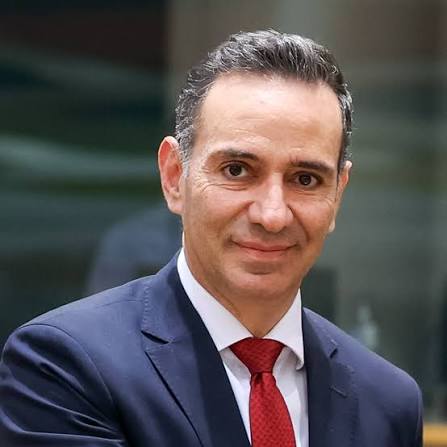
In an interview with Forbes Cyprus ahead of the Next Generation Banking & Fintech Summit, Deputy Minister of Research, Innovation and Digital Policy Nicodemos Damianou outlines the strategy through which Cyprus is seeking to strengthen its position on the international fintech and innovation map.
Damianou points to the opportunities created by bringing together a well-established financial sector and a rapidly expanding technology ecosystem, with the aim of developing more products and technologies in Cyprus, attracting international investment and creating more highly skilled jobs.
He also explains how Cyprus can make better use of the European regulatory framework, regulatory sandboxes, research, startups and investment, while identifying access to funding and talent as two of the key factors that will determine the sector’s ability to grow.
Particular emphasis is placed on the Cyprus National AI Strategy 2032, which sets out an ambition for the country to become a hub for trustworthy artificial intelligence in the Eastern Mediterranean. For Damianou, the goal is not simply to attract more fintech companies, but to build genuine technological and business substance in Cyprus, strengthen the sector’s international reach and develop solutions that can scale into European and regional markets.
The Forbes Cyprus Next Generation Banking & Fintech Summit is being held in Cyprus for the first time, at a time of major change in financial services. Why does this event matter, and what conversation should it start?
The future of financial services, and the way technology is reshaping them, goes to the heart of the wider debate about the future of the Cypriot economy. It is closely linked to our effort to move from an economic model based almost entirely on services towards one driven increasingly by knowledge, innovation and technology.
That is precisely the conversation the Forbes Cyprus Next Generation Banking & Fintech Summit brings to the fore, and why I congratulate Phileleftheros Media Group and Forbes Cyprus for putting it centre stage.
The global financial landscape is changing. Geopolitical uncertainty is affecting investment decisions, while the digital economy, artificial intelligence and a new environment of risk and uncertainty are reshaping services, competition and customer expectations. For Cyprus, the question is what role it wants to play in that transformation.
Banking has long been one of the main pillars of the Cypriot economy. Alongside it, a strong technology sector has emerged, now contributing more than 15% of GDP and accounting for over 30% of total foreign investment in the country.
Fintech is becoming an increasingly important part of that growth. More than 300 companies are active in the sector in Cyprus, while fintech businesses account for 16% of Cypriot startups. That momentum is also reflected in the StartupBlink Global Startup Ecosystem Index 2026, where Cyprus ranks 32nd globally for its fintech startup ecosystem, two places above its overall startup ecosystem ranking of 34th.
Cyprus has therefore already established a meaningful presence on Europe’s fintech map and is developing into a hub in the Eastern Mediterranean.
Our ambition is to build on that momentum and broaden its international reach: to support more products and technologies developed in Cyprus, attract more investment capital and create more highly skilled jobs. That is how we can establish Cyprus as an international hub for financial innovation.
We are starting from a strong economic base. The economy continues to grow at a robust pace, while S&P Global Ratings recently upgraded the Republic of Cyprus to an A rating with a positive outlook. Returning to the A category for the first time since 2011 is a reflection of the credibility we have built.
That gives us a solid foundation from which to approach the next stage with ambition, backed by genuine strengths and opportunities.
Where can Cyprus differentiate itself internationally in fintech, and what weaknesses does it need to overcome if it is to play a meaningful role?
Cyprus already has the foundations to play a meaningful role in the global fintech ecosystem. It has developed a combination of strengths that few countries of its size can offer: a stable and growing economy, a business-friendly environment, extensive experience in international financial and professional services, and a rapidly expanding technology sector.
At the same time, Cyprus combines the advantages of an EU base, from which fintech companies can expand across the Single Market, with a geographical position that provides access to high-growth markets across the wider Eastern Mediterranean. Our aim is to bring those advantages together into a coherent model for growth.
This is also part of the wider proposition we are building for Cyprus as a European startup nation and an internationally oriented technology hub. The economy and the business-friendly environment provide the foundation. On top of that sit three mutually reinforcing layers: research and innovation, which generate knowledge and technology; the startup and scale-up ecosystem, which turns that knowledge into products and business models; and the broader technology sector, which provides scale, international networks, investment and access to markets.
Banking and fintech sit precisely at the point where those three layers intersect with one of the Cypriot economy’s traditionally strongest sectors.
One of our advantages is that, as a small but internationally connected country, we can bring government, regulators, banks, fintech companies, universities and investors closer together. That allows us to create a trusted European environment in which solutions can be developed, tested and validated before being scaled across the European market and into markets in the wider region.
We are not looking for lower standards. What we want are clear processes, better coordination, effective sandboxes and a faster route from testing to market, while maintaining safety and trust throughout.
In that context, the Cyprus Securities and Exchange Commission’s Regulatory Sandbox has a particularly important role to play. It allows innovative solutions to be tested in real-world conditions under regulatory supervision, while the Central Bank of Cyprus Innovation Hub enables early dialogue on regulatory requirements.
Together, they provide a model of cooperation between regulators and businesses that can support the development of new solutions within a clear framework, without compromising the safety, stability or credibility of financial services.
Talent is equally important to the growth and scaling of fintech companies. Cyprus already has a highly skilled, multilingual workforce combining financial-services experience, technological expertise and knowledge of the European regulatory framework.
As a government, we are focused on continuously expanding that talent pool, both through training and through policies designed to attract skilled professionals. A key example is the Minds in Cyprus initiative, which encourages Cypriot scientists and professionals living and working abroad to return and pursue their careers on the island.
Access to capital is another critical issue. To support the growth of fintech and other innovative businesses, we are broadening the sources of funding available — from programmes run by the Research and Innovation Foundation and investment through 33East, to new financing instruments from the Cyprus Business Development Organisation.
The continued expansion of Cyprus’ venture capital community is equally important, as it can provide startups not only with private funding, but also with expertise and international networks. This is complemented by tax incentives for investment in certified innovative companies, as well as for research and the commercialisation of intellectual property.
At the same time, we are investing in the infrastructure and capabilities the sector needs: nationwide 5G and fibre coverage, computing capacity through Pharos-CY and our cooperation with NVIDIA, as well as the broader digital transformation of government.
The new Cyprus National AI Strategy 2032 is also part of that effort. Our vision is for Cyprus to be recognised as a leading hub for trustworthy AI in the Eastern Mediterranean: a trusted European jurisdiction for AI-enabled services and a bridge between the European Union and neighbouring markets.
Financial services and fintech are an important part of that vision — an area in which Cyprus already has institutional depth, established businesses, expertise and an international outlook.
The strategy sets the direction for developing and testing trustworthy, AI-enabled solutions in financial services, including applications for fraud detection and anti-money laundering, regulatory compliance, risk management, personalised services and the automation of operations.
The objective is not simply to adopt off-the-shelf tools. It is to create the conditions in Cyprus for solutions to be developed and tested safely and accountably, and then scaled internationally.
That, in short, is where our differentiation lies: European credibility, the agility of a small country and the ability to connect technology, financial-services expertise and international markets. This is what gives substance to our ambition to become a European startup nation — one built on stability and long-term potential.
Looking five years ahead, what would success look like? How will we know that Cyprus has secured a meaningful role in the international banking and fintech ecosystem?
In five years, success will mean having turned today’s advantages into an ecosystem with greater depth, a stronger international reach and more value being created in Cyprus.
Progress will not be measured only by the number of fintech companies that choose Cyprus. It will be measured by whether those companies stay as they scale, keeping product development teams, technology, intellectual property and substantive management functions in Cyprus; whether they attract international capital and serve overseas markets from a Cyprus base; and whether their solutions are adopted by banks and financial institutions both in Cyprus and abroad.
That is the next stage of our policy: moving from attracting activity to anchoring genuine technological and business substance in the country.
The Cyprus National AI Strategy 2032 gives us a clear horizon for that journey. In five years, we want to see AI-powered fintech solutions developed or validated in Cyprus being used across European and regional markets, while meeting the requirements of the European framework on compliance, cybersecurity, human oversight and clear accountability.
We will also know we are succeeding when the three forces we are already developing begin to operate more as a single system: when research and innovation lead to greater commercialisation and more spin-offs; when the startup ecosystem produces more scale-ups; and when the strong technology sector, together with banks and financial-services companies, acts as a customer, partner, investor and route to international growth for new solutions.
Success must also be visible in the real economy.
For banking and financial services, that would mean better and safer services for individuals and businesses, more efficient operations, stronger fraud prevention, faster and smarter compliance, better use of data and more collaboration between banks, fintech companies, electronic money institutions and payment institutions.
That is our goal as a government: not to declare Cyprus a fintech hub, but to consistently build the conditions that lead businesses, investors and international markets to recognise it as one.

Read more: