
Source: in-cyprus.philenews.com
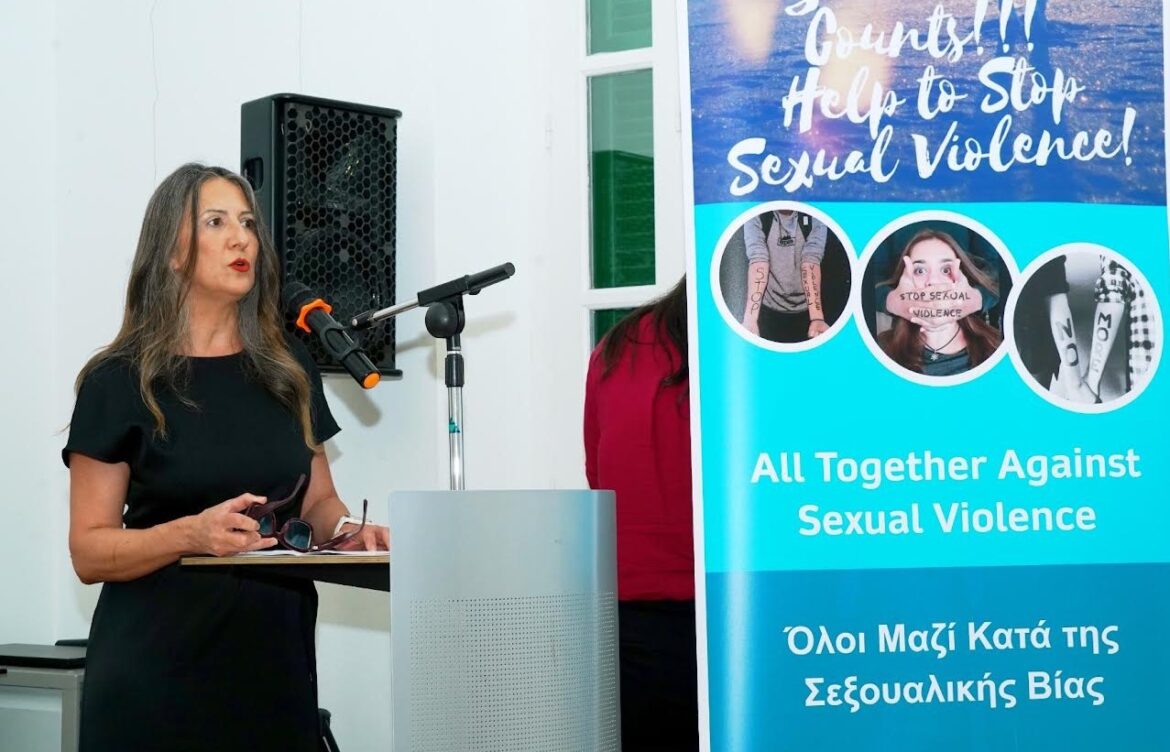
“Who fits in the algorithm? From digital inclusion to organisational responsibility for ethical Artificial Intelligence.” That was the title of a talk given by consultant, trainer and researcher Anna Prodromou two days ago (28/7), at a conference organised by the Organisation for Social Policy and Action at the Strovolos Cultural Centre. The conference’s theme was digital wellbeing, equality, social inclusion and justice.
“My talk’s title isn’t just a question about technology,” Anna Prodromou said. She added: “Who fits in the algorithm? It’s a question about us: about our assumptions, about what we choose to measure, about what we leave invisible, and about how much power we’re willing to hand over to a system. Ethical AI isn’t just a technological issue. It’s a matter of leadership, culture, governance and organisational responsibility.
I’ve just got back from Paris, where I represented the Cypriot Wikipedian community at the Wikimedia Foundation’s global conference, Wikimania 2026.
One line that stuck with me, from Bernadette Meehan, the Wikimedia Foundation’s director, was: ‘Nostalgia is not a good strategy.’ I agree. Nostalgia is not a good strategy.
We can’t deal with Artificial Intelligence by wishing ourselves back into a world before it existed. That world isn’t coming back. And besides, it wasn’t nearly as fair or as inclusive as we like to remember it.
Prejudice wasn’t born alongside the algorithm. Discrimination didn’t wait around for generative AI to show up. People were shut out of jobs, services and opportunities long before technology ever had a say in the decisions.
The difference is that today we can reproduce that exclusion on a vastly larger scale, and dress it up in the appearance of objectivity.
So we can’t go back. But we can move forward with more awareness, better choices and clearer accountability. We don’t need less Artificial Intelligence. We need more human judgement around it. We need organisations that train their people and never let an algorithmic prediction pass for unquestionable truth.
We can’t keep looking backwards, waiting for things to become what they once were. Nostalgia is not a strategy. Strategy is deciding what’s worth carrying with us into the future: human judgement, dignity, equality, the right to question, and every person’s right not to be reduced to a data set.
The real question isn’t whether AI will shape the future of work and society. It already is. The question is whether that future will have room for everyone. And that answer doesn’t belong to the algorithm. It belongs to us.”